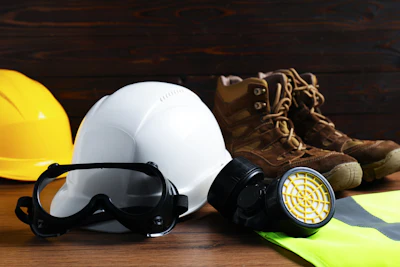
Effective shop floor safety in collision repair requires more than having protective equipment available; it demands proper maintenance of respirators and ventilation systems, regular equipment inspections, employee training on hazard recognition, and adherence to procedures for chemical storage and handling.
- Respirators must be appropriate for specific exposures with suitable filters, fit testing, and regular maintenance to protect against sanding dust, welding fumes, and refinishing chemicals
- Ventilation and extraction systems require regular maintenance and filter replacement to effectively control particles and capture contaminants at the source
- Vehicle lifts and shop equipment need regular inspections to identify wear or damage before use, reducing risks of falls or vehicle shifts
- Chemical storage requires clear labeling, accessible safety data sheets, and proper spill controls to ensure safe handling by employees
- Employee training on protective equipment use, hazard recognition, emergency response, and provincial or territorial chemical handling requirements connects all safety measures to daily work
Respirators hanging beside a paint booth, extraction hoses running from sanding stations and protective eyewear tucked into toolboxes are all familiar sights in a collision repair shop. Safety equipment is woven into the working day, but keeping employees protected involves more than having the gear on hand. Equipment must be maintained, procedures followed and hazards addressed before they become a problem.
Respiratory protection is a major consideration in collision repair, where sanding dust, welding fumes and refinishing chemicals can pose different risks. Respirators need to be appropriate for the exposure, with suitable filters, fit testing and maintenance where required. Protective gloves, eyewear and hearing protection also play a role across the shop, particularly when employees move between tasks with different hazards.
Ventilation and extraction systems do much of their work out of sight. Dust extraction helps control particles generated during sanding and grinding, while local exhaust ventilation can capture contaminants close to where they’re produced. Paint booths provide controlled conditions for refinishing, but filters, airflow and other system components need regular attention. A system that isn’t maintained properly may not perform as intended.
Vehicle lifts and other shop equipment bring another set of safety considerations. Regular inspections can identify wear or damage before equipment is used, and proper procedures for supporting vehicles help reduce the risk of a fall or shift during repairs. The same attention applies to chemical storage, where clear labels, accessible safety data sheets and appropriate spill controls help employees handle materials safely.
Training connects these measures to the work happening on the floor. Employees need to know how to use protective equipment, recognize hazards and respond to spills or other emergencies. Chemical handling and storage procedures must also reflect applicable provincial or territorial requirements, which can vary across Canada.
From respiratory protection and ventilation systems to lifting equipment and chemical storage, safety products cover a broad range of needs across the shop. Advances in equipment design, along with reliable maintenance supplies and replacement components, help shops keep these safeguards in working order.