Collision repair relies on a combination of hand tools, power tools, and specialty equipment tailored to different vehicle materials and repair methods. Modern tool design emphasizes durability, control, and ease of use, with cordless options and battery platforms expanding capabilities for working in confined spaces.
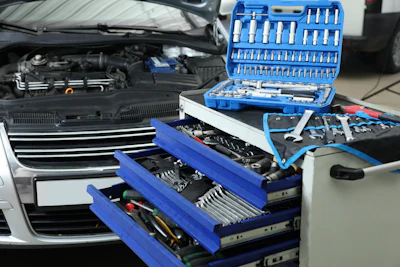
- Hand tools like sockets, wrenches, pliers, and trim removal tools remain essential for disassembly and reassembly throughout collision repair work
- Power tools including drills, impact tools, sanders, and grinders come in various configurations with cordless and pneumatic options available
- Specialty tools address complex jobs like panel repair, fastener removal, and component-specific work that standard equipment cannot handle easily
- Modern tool design focuses on durability, control, and ease of use, with battery technology improvements enabling work in confined spaces and on delicate components
- Tool selection continues to evolve as manufacturers use different attachment methods and materials, requiring technicians to adapt their equipment to modern vehicle construction
Tools are part of nearly every stage of a collision repair, from removing damaged components and preparing panels to fitting replacement parts and completing the final details. The selection available to technicians has grown alongside vehicle design, with tools developed for particular materials, fasteners and repair methods.
Hand tools remain a staple on the shop floor. Sockets, wrenches, pliers, screwdrivers and specialty bits are used throughout disassembly and reassembly, while trim removal tools help technicians work around clips, mouldings and interior components. Having the appropriate tools for a job can also help limit damage to parts that need to be reused, particularly as vehicle assemblies become more complex.
Power tools bring speed and consistency to many tasks. Drills, impact tools, sanders and grinders are available in a range of configurations, with differences in power, size, weight and ergonomics. Cordless options have expanded the range of tools that can be used without a power cord or air line, while pneumatic tools remain common in many repair environments. Battery platforms, charging requirements and compatibility with existing equipment are also part of the evolving tool landscape.
Specialty tools address jobs that standard equipment may not handle as easily. Panel repair tools, clip and fastener removal sets, pullers and tools designed for specific vehicle components give technicians more options when dealing with limited access or tightly fitted parts. As manufacturers use different attachment methods and materials, the range of specialized tools continues to reflect the complexities of modern vehicle construction.
Tool design continues to evolve with a focus on durability, control and ease of use. Improvements in battery technology, compact designs and adjustable settings have broadened the options available for work in confined spaces and on delicate components.