Automotive paint matching requires far more than applying a color formula. Technicians must account for sun exposure, weathering, paint system compatibility, application techniques, and lighting conditions to achieve finishes that blend seamlessly with surrounding panels.
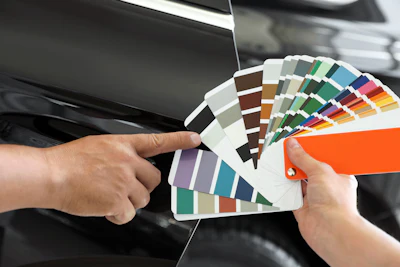
- Color databases and spectrophotometers help technicians measure existing finishes and compare variants when exact matches are difficult
- Paint system compatibility matters as much as color—primers, sealers, basecoats, and clearcoats must work together following manufacturer procedures
- Waterborne and solventborne basecoats have different application requirements, flash times, and curing needs that affect the final result
- Coverage, consistency, and technical support influence which paint line a shop selects beyond just color quality
- Application method and lighting can significantly change how a color appears on the vehicle
Matching automotive paint involves more than looking up a colour code. Sun exposure, weathering and previous repairs can all affect a vehicle’s existing finish, making an exact match difficult even when the original paint formula
is available.
Colour databases help narrow the options, but technicians may need to compare variants, use a spectrophotometer to measure the existing finish or spray test panels before settling on a formula. Application technique and lighting can also influence how a colour appears. The aim is not simply to reproduce a formula, but to achieve a finish that blends with the surrounding panels.
The paint system plays an equally important role. Primers, sealers, basecoats and clearcoats each serve a specific purpose, and products must be compatible with the system being used. Application methods, flash times and curing requirements vary, making it essential to follow manufacturer procedures throughout the refinishing process.
Product technology continues to evolve. Waterborne basecoats are widely used in collision repair, while solventborne products remain available for certain systems and applications. Each has specific application and handling requirements, along with considerations for workplace safety and environmental compliance. Technicians need to understand the products they are using and the conditions required to achieve the intended result.
Selecting a paint line also involves considerations beyond the quality of the finished colour. Coverage, consistency, availability and technical support can all affect a shop’s operations. Material costs matter, but so does how efficiently a product can be applied and whether it delivers consistent results across a range of repairs. Reliable supply is another consideration, particularly when delays in obtaining materials can hold up work already in progress.
As paint systems evolve, colour accuracy is only one part of the equation. Coverage, product compatibility, application requirements and material costs all influence how a paint line performs in a collision repair environment. Choosing products that meet the shop’s refinishing needs while delivering consistent results remains central to managing both quality and production.