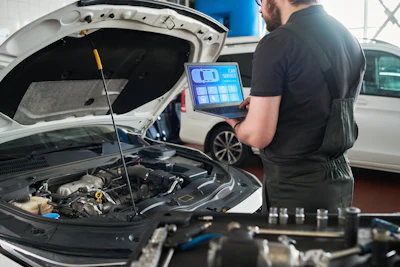
Modern collision repair shops use diagnostic scanning tools and estimating software to assess vehicle damage, identify electronic issues, and document repairs accurately. These tools help repairers handle complex vehicle systems and maintain accurate estimates as new information emerges during the repair process.
- Diagnostic scanning tools vary in vehicle coverage, functions, and access to service information, with some offering broad coverage across multiple makes and others providing specialized capabilities
- Pre- and post-repair scanning has become standard practice to identify diagnostic trouble codes and flag issues requiring further investigation
- Estimating software combines damage documentation, parts information, labor operations, and repair costs into a single workflow with digital imaging capabilities
- Software updates are critical as new vehicle models and electronic systems enter the market with changes to diagnostic functions
- Diagnostic findings help identify additional repair areas, while further inspection may reveal damage not apparent in initial assessment, requiring digital tools to keep estimates current
Modern vehicles bring a growing amount of electronic information into the collision repair process. Diagnostic scans, vehicle-specific data and estimating software help repairers assess damage, identify potential issues and document the work required. Together, these tools support decisions made from the initial inspection through to the final stages of a repair.
Diagnostic scanning tools vary in their vehicle coverage, functions and access to service information. Some offer broad coverage across multiple makes, while others provide more specialized capabilities. Software updates are a key consideration as new models and electronic systems enter the market, bringing changes to diagnostic functions and available information. Connectivity, ease of use and compatibility with existing shop systems can also influence how a tool fits into daily operations.
Pre- and post-repair scanning have become familiar parts of the repair process. Scan results can help identify diagnostic trouble codes and flag issues that may require further investigation. The tools available range from dedicated diagnostic devices to platforms that combine scanning with repair information and other functions. Access to current diagnostic information is particularly relevant
as vehicles incorporate more electronic features and driver
assistance systems.
Estimation software brings damage documentation, parts information, labour operations and repair costs into one workflow. Features vary across platforms, including the depth of vehicle data available and the ability to connect with other shop management systems. Some solutions also incorporate digital imaging and documentation tools, allowing repair information and vehicle damage to be recorded and shared as an estimate develops.
The connection between damage assessment and estimating is another part of the changing landscape. Diagnostic findings can help identify additional areas that need attention, while further inspection may reveal damage that was not apparent during the initial assessment. Keeping estimates accurate as new information becomes available is a familiar challenge for repairers, and digital tools continue to offer more ways to organize and update that information.