Electric vehicle repairs require specialized training and personal protective equipment to safely handle high-voltage systems and prevent hazards like unintended vehicle movement and electrical shock. Collision centers must provide technicians with proper tools, follow OEM procedures, and conduct thorough pre-repair inspections to ensure safe and confident EV repairs.
- High-voltage hazards include risk of unintended vehicle movement and electrified conductive surfaces after collision damage
- Essential PPE includes high-voltage gloves, insulated tools, safety hooks, and surface-voltage testers to detect live electrical plates
- Pre-repair inspection and OEM procedure compliance are critical first steps before bringing any EV into the shop
- Technician training builds confidence and ensures safe, effective repairs as EV adoption continues to rise in the industry
- Workspace control through proper signage and blocking off vehicles keeps all staff aware of high-voltage work areas
TRAINING AND PPE REMAIN CRITICAL AS ADOPTION RISES
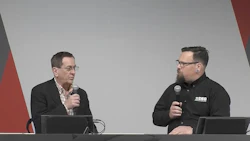
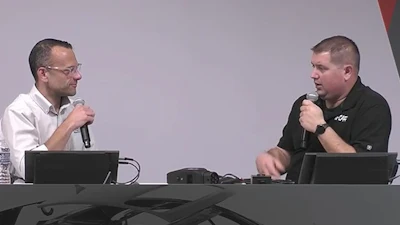
When it comes to electric vehicle repairing at collision centres, there are significant safety concerns that can only be mitigated through training and investing in proper equipment, Joel Dufkis (right), an EV and ADAS instructor with I-CAR, and Joshua Linton (left), the EV manager for Midtronics EV Collision Solutions, said during a presentation held during the 2025 SEMA Show on November 4.
Linton, who said his work centres on providing EV safety solutions as adoption continues to rise, says many of these questions don’t have clear answers because of a lack of consistency in EV design and the rapid pace of technological change. As a result, the priority for collision business owners should be to provide technicians with “the right tools to ensure they are done safely and can be done with confidence.”
As technicians begin working on electric vehicles, he said “a lot of questions come up.” One of the most immediate is whether collision damage can create a situation “where there is a risk these cars move by themselves,” something no technician wants to encounter. He went on to explain that this risk can be mitigated by thoroughly examining a vehicle prior to allowing it inside a shop.
Another concern is whether conductive exterior surfaces may become electrified after a collision. Linton pointed to the role of a surface-voltage testers, tools that determine whether a conductive plate is live. “If there is voltage on a plate, it’ll turn red and start to vibrate,” he said. He described it as a basic but essential part of EV PPE.
Dufkis said the starting point for safe EV repairs is understanding the technology built into modern vehicles. “We need to know what’s going out into cars in order to repair them,” he said. This includes following OEM procedures and conducting an initial inspection before bringing a vehicle into the shop.
He stressed that technician confidence “depends on training.” Many participants in I-CAR’s courses arrive unsure of themselves, he said, “because they haven’t had much experience,” but their confidence grows as they progress through training. With EVs still new to the industry, Dufkis said “everyone needs training to repair EVs safely and effectively.”
The required PPE is straightforward but non-negotiable. Dufkis listed a rescue or safety hook “in case something happens,” high-voltage gloves to insulate technicians from electrical energy and insulated tools for any activity involving high-voltage cables.
“You need to have the stuff on hand and know how to use it,” he said, emphasizing the importance of testing equipment before use. He also highlighted the need to control the workspace. “By blocking EVs off and putting up signage around them, you keep everyone aware of what is going on,” he said. That level of precaution aligns with most OEM expectations.
Dufkis also pointed to the charge port as the area where technicians are most likely to interact with high-voltage cabling during repairs. Locations vary, he said, but “they’re all in easy spots to get hit in an accident.”
I-CAR provides EV and ADAS training programs designed to prepare technicians for emerging vehicle technologies. Midtronics EV Collision Solutions develops diagnostic and safety tools for high-voltage vehicles and works with OEMs to ensure technicians can assess EVs safely and consistently.
December 2, 2025 Toronto, Ontario -- When it comes to electric vehicle repairing at collision centres, there are significant safety concerns that can only be mitigated through training and investing in proper equipment, Joel Dufkis (right), an EV and ADAS instructor with I-CAR, and Joshua Linton (left), the EV manager for Midtronics EV Collision Solutions, said during a presentation held during the 2025 SEMA Show on November 4.
Linton, who said his work centres on providing EV safety solutions as adoption continues to rise, says many of these questions don’t have clear answers because of a lack of consistency in EV design and the rapid pace of technological change. As a result, the priority for collision business owners should be to provide technicians with “the right tools to ensure they are done safely and can be done with confidence.” As technicians begin working on electric vehicles, he said “a lot of questions come up.”
One of the most immediate is whether collision damage can create a situation “where there is a risk these cars move by themselves,” something no technician wants to encounter. He went on to explain that this risk can be mitigated by thoroughly examining a vehicle prior to allowing it inside a shop.
Another concern is whether conductive exterior surfaces may become electrified after a collision. Linton pointed to the role of a surface-voltage testers, tools that determine whether a conductive plate is live. “If there is voltage on a plate, it’ll turn red and start to vibrate,” he said. He described it as a basic but essential part of EV PPE.
Dufkis said the starting point for safe EV repairs is understanding the technology built into modern vehicles. “We need to know what’s going out into cars in order to repair them,” he said. This includes following OEM procedures and conducting an initial inspection before bringing a vehicle into the shop.
He stressed that technician confidence “depends on training.” Many participants in I-CAR’s courses arrive unsure of themselves, he said, “because they haven’t had much experience,” but their confidence grows as they progress through training. With EVs still new to the industry, Dufkis said “everyone needs training to repair EVs safely and effectively.”
The required PPE is straightforward but non-negotiable. Dufkis listed a rescue or safety hook “in case something happens,” high-voltage gloves to insulate technicians from electrical energy and insulated tools for any activity involving high-voltage cables. “You need to have the stuff on hand and know how to use it,” he said, emphasizing the importance of testing equipment before use.
He also highlighted the need to control the workspace. “By blocking EVs off and putting up signage around them, you keep everyone aware of what is going on,” he said. That level of precaution aligns with most OEM expectations.
Dufkis also pointed to the charge port as the area where technicians are most likely to interact with high-voltage cabling during repairs. Locations vary, he said, but “they’re all in easy spots to get hit in an accident.”
I-CAR provides EV and ADAS training programs designed to prepare technicians for emerging vehicle technologies. Midtronics EV Collision Solutions develops diagnostic and safety tools for high-voltage vehicles and works with OEMs to ensure technicians can assess EVs safely and consistently.
collisionrepairmag.com/15773115