Three-dimensional computerized measuring is now a foundational requirement in collision repair, not an optional step, because modern vehicles with advanced materials, electronic suspension, and ADAS systems depend on precise structural accuracy to function safely. Modern repair tolerances have tightened to less than one millimeter, making 3D measuring the only reliable method for ensuring structural components meet specifications.
- 3D measuring is mandatory: Modern repair tolerances have tightened to less than one millimeter, making computerized measuring essential for late-model vehicle repairs.
- Catches hidden damage: 3D systems identify indirect damage beyond visible impact areas, preventing costly surprises during downstream repair work.
- Tracks multiple dimensions: Computerized systems measure height, width, and length simultaneously while vehicles are being pulled, showing real-time structural changes.
- Stable setup is critical: Accurate measurements require anchored vehicles and undamaged control points from the center section as the foundation.
- Creates valuable documentation: 3D systems generate printed reports before and after repairs, providing protection against post-repair disputes and liability claims.
SEMA PRESENTERS SAY STRUCTURAL ACCURACY DEPENDS ON FULL-DIMENSIONAL VERIFICATION
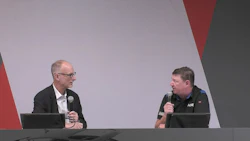
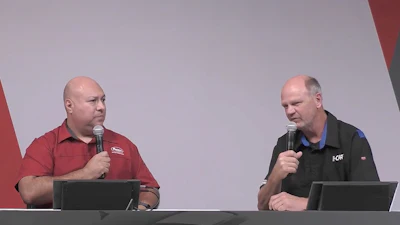
Three-dimensional computerized measuring is a foundational step in structural collision repair, not an optional add-on, according to Ruben Castorena, an instructor with Chief Automotive Technologies, and I-CAR’s Anton Verwijst during an interview session on the Collision Repair and Refinish Stage at the 2025 SEMA Show in November. Castorena opened by telling attendees new vehicle development have changed structural expectations across the industry. “Today’s vehicles have evolved so much in the past ten years — with new materials, electronic suspension and ADAS. That means it’s very important that we put the vehicle back to its correct dimensions because other systems rely on that.”
Verwijst said computerized measuring is the only reliable method when structural components are involved. “I’m a firm believer that 3-D measuring is the only way to go when you’re changing structural parts or checking the structure of a car.”
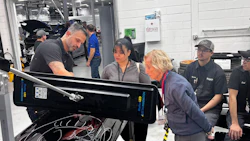
Castorena said today’s computerized measuring systems give technicians a clearer picture of how a vehicle’s structure changes throughout a repair. He noted that the equipment tracks height, width and length simultaneously and produces printed reports before and after the work is completed. More importantly, it shows how those dimensions shift while the vehicle is being pulled.
Castorena added that the same capability applies to driver-assistance components. “You can also use it to measure ADAS sensors. A lot of these sensors are symmetrical, but some are asymmetrical.”
The presenters noted that modern repair tolerances have tightened sharply with computerized systems — in some cases to less than one millimetre — and said that level of precision makes three-dimensional measuring a practical requirement for safe repairs on late-model vehicles.
Castorena stressed that accuracy begins with a stable setup. “When you measure a vehicle, all measurements should start from the centre section — so having an anchored vehicle will give you the most accurate measurements.” Verwijst compared the process to construction. “Setting up your base for the measurement system is like building a house. If you don’t have good foundations, the measurements won’t be accurate.”
Castorena told technicians to select undamaged points whenever possible. “When you start measuring the base, you want to use four undamaged control points when possible,” he said. “There might be a scenario where there’s damage to the centre section, but three good points will still be useful. You’ve got to make sure the control points are within tolerance.”
Verwijst said an off-spec centre section changes the order of repair but not the outcome. “If you have a centre base that’s off, it doesn’t mean you can’t repair the car… until you get the centre section, you’re not going to get accurate readings. Base first and everything else from there.”
Both speakers stressed that collision energy travels beyond visible impact. Castorena noted that “cars are designed to absorb energy, so damage to the front bumper can travel down to the back rail. You can’t just measure the damaged area.” He said three-dimensional systems help identify issues technicians might not see otherwise. “If a vehicle did sustain indirect damage, by measuring the non-impact side, we can identify it… it also lets you see if there was prior damage.”
Castorena added that computerized systems allow technicians to expand monitoring anywhere on the vehicle. “There is no limit on the maximum number of measure points you can create.” Verwijst said the documentation generated by 3-D systems is valuable long after repairs are finished. “Documentation is great… it’s good if there’s problems after the repair.”
He encouraged technicians to widen their inspection when needed. “If you’re measuring something, keep measuring out until there’s a problem.”
Castorena contrasted computerized measuring with traditional point-to-point tools. “If you use a point-to-point system, it’s best to use a reference guide… but you’re not going to get height measurements. That’s the only problem with a point-to-point system.”
Verwijst warned against relying on simple mechanical checks to sign off structural work. “Don’t use your tram bar for your final repair.”
The presenters linked accurate measuring to faster downstream work. Castorena said preparatory checks improve alignment efficiency. “By doing your steering and suspension alignment, you’re going to make it more accurate and quicker to get wheel alignments.”
He added that uncovering structural issues early prevents surprises later in the process. “We want to uncover all the possible damage so that when we’re done with the vehicle and it goes to alignment it’s not going to get rejected.”
collisionrepairmag.com/15773977