Cars are turning into “rolling computers,” and that changes everything from how they are built to how they are repaired.
That was the message from Florian Rohde, managing partner of iProcess and a former vehicle firmware validation leader at Tesla, during a Tech Talk 360 webinar hosted by AirPro Diagnostics in December.
“The car that I buy today will stay fresh… I continuously get software updates, I get feature updates, and I get modifications—ideally to the better,” Rohde said.
He argued the industry has to let go of a long-held assumption — that start of production marks the finish line. “The software defined vehicle is only successful when it is utilized properly… which requires a change in mindset that the start of production means the end of development; you can’t say that anymore.”
In a software-defined vehicle, electronic control units no longer operate as isolated modules. They function together under a centralized architecture, allowing the vehicle to act as a single system. That design supports over-the-air updates and rapid software “release train” cycles that can push improvements every two weeks.
The connected structure also creates a feedback loop. Rohde pointed to data showing some features are heavily used early in ownership and then taper off, giving manufacturers real-world insight into how vehicles are actually driven and used.
But gathering information is only part of the job. “Today, it is very common that these data lakes are only collecting data but there is no smart handling of that information,” Rohde said, adding that automated processing is required to extract value at scale.
For collision repairers, the shift raises practical questions.
Fred Ayono of AirPro Diagnostics asked how technicians can identify which subscription-based features are active on a vehicle during repairs. “I’m repairing the car and how do I know… it’s got one of these subscriptions? … How do I know I’m fixing this or how it’s going to affect another subscription because that subscription isn’t turned on yet?”
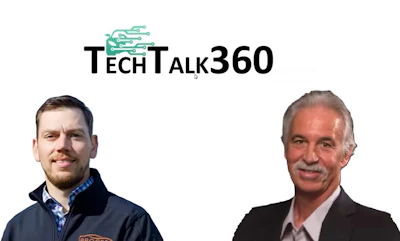
Co-host George Avery, past chair of the National Auto Body Council, said the goal of the Tech Talk 360 series is “to provide a learning environment around emerging technologies that will enhance consumer safety, workplace professionalism, and provide value to all industry segments.”
He also questioned why legacy automakers struggle to move at software speed. “Why can’t all the OEMs do it this way? Why is it so different? … I can see where the customers are getting user experience out of telecommunication and they expect things like this from their car makers as well.”