The 82nd ARA Convention highlighted how automotive recyclers are adapting to industry challenges through AI technology, enhanced certification standards, EV safety training, and cross-border collaboration to improve efficiency and sustainability.
- AI-powered innovation enables automatic part identification from auction photos with up to 90 percent accuracy, giving early adopters significant competitive advantages.
- New certification program replaces the Gold Seal standard with an ISO 9000-based system featuring a digital dashboard to track returns, customer satisfaction and online reviews in real time.
- EV training expansion includes U.S. Department of Energy-funded redevelopment of high-voltage safety and dismantling protocols, with Canadian programs serving as models for North America.
- Sustainability leadership through verified greenhouse-gas reduction data positions Canadian recyclers as global environmental leaders while creating measurable business value.
- Collaboration strategies including cross-border partnerships between ARC, OARA and ARA address declining engagement by sharing resources and developing unified North American standards.
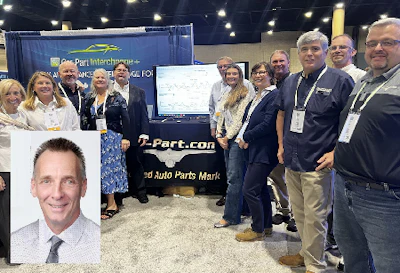
Toronto, Ontario -- The 82nd Annual Automotive Recyclers Association Convention in Birmingham, Alabama brought together recyclers, collision repair leaders and innovators from across North America.
While many U.S. associations acknowledged falling engagement and leadership turnover, the overall tone was one of adaptation and progress — with technology, certification and sustainability leading the charge.
Engagement challenges, collaborative solutions
Across the U.S., many state associations are facing declining participation and difficulty attracting new leaders. Several are joining forces to co-host events and share resources.
The message was clear: collaboration and modernization are essential for long-term survival — a lesson that resonates across both the recycling and collision sectors.
In Canada, we’ve placed growing emphasis on building stronger ties between recyclers, insurers and collision repairers to improve parts utilization, communication and consumer confidence.
A new certification era
One of the most significant developments at the convention was ARA’s announcement of a forthcoming certification program that will replace the long-standing Gold Seal standard and operate as an enhanced layer above CAR Certification.
The new program, developed in partnership with URG, is built on ISO 9000 principles and integrates a digital dashboard to track key performance indicators such as returns, customer satisfaction and online reviews — moving certification from a static label to a dynamic measurement system.
During the convention, ARC and OARA met with ARA and URG leadership to discuss potential collaboration on the initiative. Our goal is to review the content, provide feedback and help shape a North American certification standard that supports recyclers on both sides of the border while strengthening confidence across the collision repair supply chain.
EV training and battery safety
Electric-vehicle handling, storage and safety were dominant themes. ARA is redeveloping its EV and high-voltage training through a U.S. Department of Energy grant, incorporating enhanced safety and dismantling protocols.
Canadian initiatives through ARC and OARA’s national EV battery recovery and training programs drew considerable interest, with U.S. counterparts eager to learn from the established Canadian model.
AI and technology transformation
Artificial intelligence is rapidly reshaping the recycling and collision landscape. Demonstrations in Birmingham showcased AI tools capable of analyzing auction photos to identify parts and assess condition with up to 90 percent accuracy. Automated phone and inventory systems are already improving efficiency and part identification — giving early adopters a major advantage.
Sustainability and data leadership
Quantifying carbon savings from reused parts is becoming a critical metric for insurers, policymakers and manufacturers. ARC’s verified greenhouse-gas reduction data continues to position Canadian recyclers as global leaders in environmental performance — turning sustainability into a measurable business value.
Looking forward
Despite declining engagement among some U.S. associations, the industry’s advances in certification, EV safety and technology adoption remain encouraging. The convention reinforced a shared understanding:
Data, collaboration and innovation will drive the next generation of auto recycling — and through joint efforts between ARC, OARA and ARA, we can ensure those standards extend across North America.