The executive director of the Automotive Recyclers of Canada, a national association representing end-of-life vehicle recyclers and dismantlers across Canada, says a Niagara Regional Police investigation into the theft and trafficking of newer-model Lexus and Toyota vehicles in Southern Ontario points to the role legitimate recyclers can play in disrupting organized vehicle theft networks.
Niagara Regional Police said Project Jack Links, an auto theft investigation launched in December 2025 after the theft of a Lexus SUV in April 2025, has led to more than $5 million in recovered property. Police said the investigation involved more than 50 thefts and attempted thefts in Niagara Region, with estimated losses exceeding $20 million across Southern Ontario.
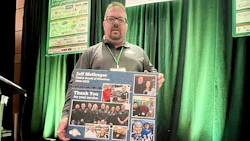
In a public LinkedIn post, ARC executive director Wally Dingman said the investigation showed auto theft is not limited to isolated vehicle thefts.
“Another major auto theft investigation in Ontario exposing what many of us already know — this is not isolated vehicle theft,” Dingman wrote. “This is organized crime operating through sophisticated networks across multiple regions and borders.”
Dingman said containers, fraudulent declarations, theft crews and export channels show how advanced the operations have become.
“We need stronger collaboration between law enforcement, all levels of government, border services, insurers, regulators, auctions, and legitimate automotive recyclers to disrupt these networks more effectively,” he wrote.
Dingman said professional auto recyclers are part of the response, pointing to accountability, traceability and oversight.
Niagara Regional Police Service, based in Niagara Falls, Ont., said Project Jack Links targeted groups involved in the theft and trafficking of high-end vehicles. Police said investigators identified several distinct criminal networks operating in Southern Ontario.
Police said stolen vehicles were recovered at the Port of Montreal through work involving the Canada Border Services Agency, the Service de police de la Ville de Montréal, the RCMP and the OPP. Investigators determined the vehicles were being prepared for export to ports in West Africa.
The investigation has resulted in multiple arrests and more than 80 charges, according to public statements from police and Équité Association. Police said the individuals charged are believed to be responsible for more than 112 motor vehicle theft-related occurrences.
A public comment from an official atthe Used Car Dealers Association of Ontario, a Toronto-based not-for-profit association representing almost 5,000 motor vehicle dealers across Ontario, backed the role of recyclers in theft investigations.
“We couldn't agree more,” the comment read. “Hopefully the legitimacy and efficacy of automotive recyclers will be used regularly now.”
Équité Association, a national not-for-profit that works with Canadian property and casualty insurers to fight insurance fraud and crime, also credited the investigation, saying it had collaborated on Project Jack Links and worked with law enforcement to combat organized auto theft.
“Together, we continue to prove that when law enforcement, government, and the insurance industry work hand-in-hand, we can effectively turn the tide against organized auto crime,” Équité wrote in a public post.
Police said Project Jack Links remains active, with investigators reviewing electronic, digital and forensic evidence. Further arrests and charges are expected.