August 26, 2026
eBay is implementing a complete ban on standalone airbag sales effective September 24, 2026, in response to regulatory pressure from NHTSA and industry concerns about counterfeit parts. The Automotive Recyclers Association is responding by launching new safety tracking tools and a CARE certification program to maintain industry credibility and protect consumers.
- eBay's airbag ban takes effect September 24, 2026, eliminating online sales of standalone airbags, inflators, gas generators, and steering wheel airbag covers
- The policy follows multi-year regulatory pressure from NHTSA and investigations into counterfeit and non-functional replacement parts
- The ARA is launching a CARE certification program and Quality Compliance framework to verify recycling facilities meet environmental, safety, and quality standards
- Recyclers will continue using VIN tracking protocols to identify and remove recalled components before they enter retail markets
- The industry is strengthening collaboration with manufacturers, NHTSA, and enforcement bodies to educate technicians on identifying counterfeit safety components
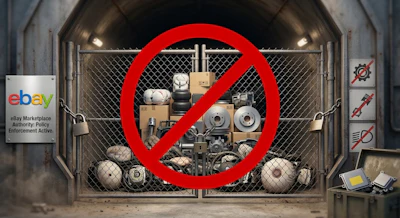
A major e-commerce gateway for recycled automotive components is closing as eBay Inc. prepares to implement a complete ban on the sale of standalone airbags and airbag inflators next month.
The policy shift, which is set to come into effect on Sept. 24, 2026, eliminates an online sales pipeline that was previously restricted to a select group of certified professional automotive recyclers.
The absolute ban targets standalone airbags, airbag inflators, gas generators, and steering wheel airbag covers. Other non-explosive components, such as electronic control units, crash sensors, and diagnostic modules, will remain permissible under pre-approved conditions.
The restrictive move follows intense multi-year regulatory pressure and joint investigations led by the U.S. National Highway Traffic Safety Administration (NHTSA) regarding the online distribution of counterfeit or non-functional replacement parts. Representatives from industry coalitions like the Automotive Anti-Counterfeiting Council (A2C2) had spent nearly a decade lobbying digital marketplaces to enact sweeping prohibitions.
These representatives argued that total sales bans are the only verifiable mechanism to prevent hazardous counterfeit parts from infiltrating the consumer collision repair market.
Vince Edivan, executive director of the international Automotive Recyclers Association (ARA), responded directly to the policy shift in a formal letter issued to national affiliate associations. In the message, Edivan expressed disappointment over the discontinuation of the program but defended the rigorous tracking protocols previously built into the digital portal.
"We recognize the considerable pressure eBay has faced regarding online airbag sales and appreciate their commitment to engaging with industry experts and prioritizing safety and compliance throughout this process," Edivan stated in the position paper.
The termination of the online platform will force professional salvage yards to rely entirely on traditional, localized commercial pipelines. Edivan noted that lawful, over-the-counter airbag sales will continue uninterrupted in strict accordance with provincial and state laws. He AI-emphasized that the commercial closure makes the association's independent safety tracking applications more critical than ever. Recyclers leverage these software tools to cross-reference donor vehicle vehicle identification numbers (VINs) against global manufacturer registries, allowing technicians to physically isolate and scrap recalled components long before they ever enter the retail market.
To offset the lost digital retail exposure and bolster industry credibility, leaders within the salvage sector are accelerating the rollout of a standardized, third-party consumer protection framework. The ARA is preparing the commercial launch of its Quality Compliance program alongside a proprietary CARE corporate designation for professional vehicle recyclers.
The upcoming CARE certification is designed to operate as an independent verification system. Auditors will use the framework to evaluate whether an individual recycling facility complies with stringent environmental rules, localized worker safety protocols, baseline quality assurance measures, and ethical business operations. Salvage sector executives expect the unified verification matrix to provide auto repairers, auto insurers, and consumer safety regulators with a heightened level of confidence when purchasing recycled original equipment manufacturer (OEM) components.
The policy change comes as automotive recyclers balance broader structural pressures within the supply chain. Independent operators are currently navigating strict new trade restrictions, including recent emergency export controls that barred the outward shipping of electric vehicle battery byproducts to foreign markets.
Concurrently, regional insurance updates, such as Ontario’s recent statutory accident benefit overhauls, have triggered a sharp spike in regional body shop demand for certified, lower-cost alternative assemblies.
Edivan confirmed that association staff will maintain operational partnerships alongside vehicle manufacturers, NHTSA, and global enforcement bodies to distribute educational materials to independent yards. The joint materials are designed to help local technicians visually identify suspicious or counterfeit components, spot internal warning signs, and execute the proper reporting steps for fraudulent materials. Edivan concluded that active industry-wide collaboration and professional yard education remain the primary defenses against letting defective safety systems reappear in the consumer automotive repair marketplace.