An NPR radio feature on the cost of recycling electric vehicle batteries is drawing praise from leading industry figures in Canada and the U.S.
The feature aired July 13 on NPR’s All Things Considered. Reporter Camila Domonoske examined why an EV battery can contain valuable materials but still leave an automotive recycler with a large bill. It featured Thomas Andrade, co-owner of Everett Auto Parts in Brockton, Mass., and Brian Bachand, CEO of Westover Salvage Yard in Belchertown, Mass.
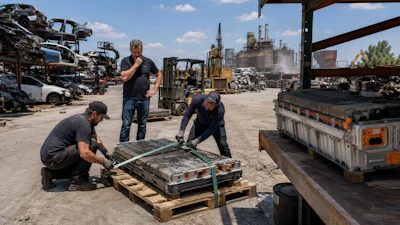
In the piece, Andrade was sending several Chevrolet Volt batteries to a processor. His business would receive no payment, but the batteries would be accepted without charge. Bachand described a working Tesla battery that had not found a buyer. His business had listed it for US$1,200, while the only recycling quote he had received was US$1,800.
The pair were joined by Emil Nusbaum, vice-president of strategy, government and regulatory affairs at the Automotive Recyclers Association. She discussed the uncertainty recyclers face when buying damaged or end-of-life EVs. A battery could be sold as a replacement part, used for energy storage or sent for recycling. It could also cost thousands of dollars to handle responsibly.
Responding to the feature in a social media post, Steve Fletcher, former executive director of Automotive Recyclers of Canada, wrote that the feature got “quite a few things right” about the issue from the recycler’s point of view.
In a comment, Nick Nesbitt, CEO and founder of Ontario battery reuse company Mapleview Energy, said the feature also showed the need for more facilities that can test and repurpose used batteries before they are recycled.
In a July 14 post, ARA staff praised NPR for drawing attention to the issue. Andrade is the association’s first vice-president and treasurer, while Bachand is a longtime member.
ARA staff wrote that the problem could grow as more EVs reach salvage yards and more manufacturers use lithium iron phosphate batteries. These batteries contain less valuable material and may cost recyclers money to process.
ARA staff called for rules that place more responsibility on battery and vehicle producers. They also supported recycler access to information about a battery’s condition and remaining charge.
The post pointed to a new Colorado law as a possible model. The law will require battery providers to collect certain unwanted EV batteries and ensure they are properly reused, repurposed or recycled.