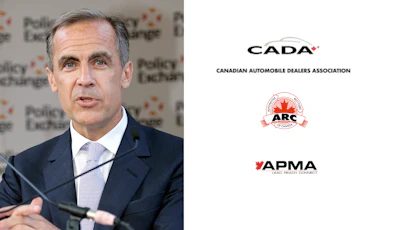
Canada's government has cancelled a controversial electric vehicle mandate that required one-in-five vehicles sold in the country to be emission-free starting in 2025, with automotive aftermarket associations welcoming the decision due to concerns about production costs, limited consumer demand, and supply chain disruptions.
- Canada cancelled the requirement that one-in-five vehicles sold in 2025 be fully electric, citing high production costs and limited consumer demand
- The original mandate aimed for 100 percent electric vehicle sales by 2035 to align with EU and U.S. policies
- Aftermarket associations support the reversal, emphasizing the need for better infrastructure, training, and consumer demand before accelerating the transition
- U.S. tariffs and supply chain disruptions have weakened Canadian automotive competitiveness, prompting the policy change
- Quebec and British Columbia maintain similar EV mandates, with industry leaders calling for coordinated policy adjustments across provinces
Toronto, Ontario -- Canada's automotive aftermarket associations are responding favourably to the news that Ottawa is cancelling a controversial mandate related to electric vehicle sales set to come into force next year.
This week, Prime Minister Mark Carney’s government announced it was cancelling the requirement that one-in-five vehicles sold in Canada next year be emission-free.
The federal EV mandate launched in late 2023 and was intended to spur investment in EV production, charging infrastructure and supply chains. The program was also meant to help align Canada with policies already in place in the European Union and parts of the United States. It also calls for 100 percent of vehicles sold in Canada to be fully electric by 2035.
Government officials say the change was needed because the auto industry is under mounting pressure from a combination of high production costs, limited consumer demand, and because new U.S. tariffs that have disrupted supply chains and threatened Canadian competitiveness.
In the wake of the announcement, several industry associations have released statements in support of Ottawa's reversal.
In a piece published on CanadianRecycler.ca, Wally Dingman, executive director of the Automotive Recyclers of Canada, wrote: "At ARC, we welcome this reprieve. It’s not about slowing down the future of EVs — it’s about ensuring that all the necessary supports, training and infrastructure are in place so Canada’s auto dismantling and recycling industry can handle the wave of electrification safely and sustainably."
In a statement released by the Canadian Auto Dealers Association, officials described the move as "a start on a better path."
“This is a positive first step as it gives certainty to consumers and the automotive industry for the next year, and will help to avoid a consumer availability and affordability crisis in the short term,” said Tim Reuss, president and chief executive officer.
He added that other provinces with similar mandates -- namely Quebec and B.C. -- should adopt similar policies as quickly as possible.
“CADA will be engaging actively with the Federal government during the review period to ensure that any adjusted plan considers the varying differences in consumer demand across the country, as well as what is reasonable and possible with the current, and proposed charging and energy infrastructure," he added."
In an editorial published by the Toronto Star, Flavio Volpe, president of the Automotive Parts Manufacturers’ Association said the policy had been designed for a very different economic environment than the one currently being faced.
"The transition to electric vehicles is essential. But it must be paced to succeed. We can’t win the race if we crash in the curves. Right now, the smart move is to ease off the accelerator — not slam into the guardrails."