A group seeking to improve plastic repair processes is teaming up with major firms to launch a new pilot project.
Plasnomic has launched a textured plastic parts repair pilot with 3M, 4Plastic, Mirka, PPG, Polyvance and SEM, targeting a category of parts that are still usually replaced after a collision.
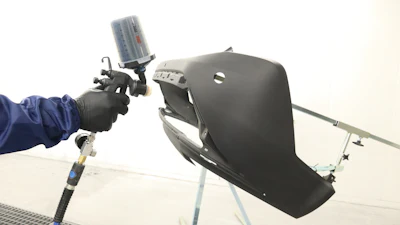
The textured parts repair pilot will focus on textured plastic components, including parts such as wheel arch mouldings and lower bumper covers. According to the release, more than 95% of textured plastic parts are replaced, even when the damage may be limited to minor scratches or repairable marks.
The plastic repair body is focused on repair-first practices, product validation, training, certification and sustainability for the global collision repair industry. Its Global Council includes representatives from collision repair, insurance, supply and plastic repair sectors.
“This pilot represents a major step forward for the collision repair industry,” said Mario Dimovski, president of Plasnomic and head of the Plasnomic global council. “Textured parts are being replaced every day when many could potentially be repaired. By bringing the industry together and technically validating products and processes, we can create a trusted framework that supports repair-first decisions, profitability, and sustainability.”
The release states that textured parts are also becoming more expensive. Some small wheel arch mouldings now sell for more than $300, while some lower bumper covers cost more than the main bumper cover itself.
The pilot will bring together collision repair groups, insurers, suppliers and other industry partners to validate repair methods, review repair-versus-replace opportunities and measure commercial and environmental results.
Products already available in the market will be tested through practical repair work and lab-based assessments. The review will examine performance, adhesion, weathering, durability, finish quality, texture appearance and repair consistency.
The pilot will also look at technician usability, repair categories, standardized workflows, pricing strategy, labour identification, training requirements, cycle time, profitability and plastic waste diversion.
Dimovski said the goal is to create a framework that can support repair-first decisions while also helping profitability and sustainability.