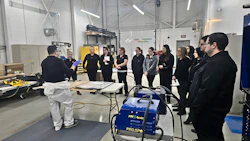
Workers in skilled trades, including repair-focused occupations, remain among those least exposed to artificial intelligence, according to new research from Anthropic.
The company’s latest report finds installation and repair jobs show almost no measurable use of AI systems today, placing them at the bottom of occupational categories where AI tools are currently being used.
The findings suggest hands-on roles that require physical work, diagnostics and in-person service remain largely outside the scope of current AI adoption.
Anthropic developed a new metric called “observed exposure” to assess how AI could affect different jobs. The approach combines the theoretical ability of large language models to perform certain tasks with real-world usage data drawn from the company’s AI platform.
A job’s exposure increases when its tasks are theoretically possible with AI, frequently appear in AI usage data and make up a larger share of the role’s overall responsibilities. Tasks that are fully automated also carry greater weight than those where AI tools are simply assisting human workers.
According to the report, installation, repair and transportation occupations show nearly zero AI usage under the company’s measurement framework.
By contrast, white-collar roles in areas such as business, finance and sales show the highest levels of AI exposure.
The study also identifies several occupations where AI tools are currently used most frequently. Among the roles listed as most exposed are computer programmers, customer service representatives and data entry keyers, followed by medical records specialists, market research analysts and marketing specialists, wholesale and manufacturing sales representatives, financial and investment analysts, software quality assurance analysts and testers, information security analysts and computer user support specialists.
The report notes that many manual and service-oriented jobs remain largely absent from AI usage data. Roughly 30% of workers fall into occupations with zero AI coverage because their tasks appear too infrequently in the company’s dataset to meet the study’s threshold.
Despite the growing adoption of AI tools across some industries, Anthropic found little evidence so far that the technology has significantly disrupted employment overall.
“AI is far from reaching its theoretical capability: actual coverage remains a fraction of what’s feasible,” the report states.
Anthropic indicated it plans to continue updating its research as new data becomes available in order to track how AI usage evolves across different occupations.