France operates a fully regulated extended producer responsibility model for end-of-life vehicles, where producers fund the system and authorized treatment facilities must meet strict de-pollution, storage, and reporting standards. In 2023, France dismantled 1.333 million vehicles from 1.7 million sold, demonstrating an effective system that offers free collection to residents and enforces mandatory traceability through a national database, serving as the benchmark for new European ELV regulations.
- France dismantled 1.333 million vehicles in 2023 from 1.7 million sold, showing a highly efficient recycling ratio
- The system operates on extended producer responsibility, where producers, importers, and brand owners fund and manage the entire ELV network
- Free collection is available to all French residents, including free pickup of abandoned vehicles and overseas take-back bonuses
- Mandatory traceability requirements mean all authorized facilities must report activity to a national database with transparent part condition codes
- New EU certification program launching early 2026 will audit dismantling sites annually and assign ratings to combat illegal sellers
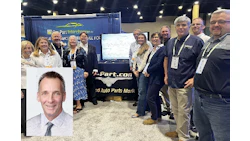
Toronto, Ontario -- On October 30, former Automotive Recyclers of Canada executive director Steve Fletcher hosted the seventh annual International Roundtable on Auto Recycling.
The International Roundtable on Auto Recycling is a recurring forum that lets members of the auto recycling sectors of different countries compare how they manage end-of-life vehicles. Each installment examines one jurisdiction in detail, with speakers explaining what policies are in place, what is working well and where gaps remain.
This year’s discussion, which can be watched online, included presentations on the regulation of end-of-life vehicles in France and in the broader European Union from two special guests: Vincent Griffon of Recycle Mon Véhicule, which oversees France’s ELV dismantling system, and environmental law consultant Claire Leschowski, who is working on regulatory proposals under consideration by the E.U.
Griffon explained that France operates a fully regulated, extended producer responsibility model. Producers, importers and vehicle brand owners fund the system and are legally responsible for meeting national performance obligations. End-of-life vehicles are placed into an official network of authorized treatment facilities. These centres must meet de-pollution, storage, parts recovery and reporting standards in order to hold their license.
“In 2023, 1.7 million new vehicles were sold in France and 1.333 million were dismantled — a good ratio,” Griffon said.
French residents can have their end-of-life vehicles collected from their homes free of charge. Abandoned vehicles can also be collected free of charge. In overseas territories, a take-back bonus is offered to encourage correct disposition and reduce illegal abandonment. The system covers both two and four wheeled motor vehicles.
“Our primary responsibility is to ensure everyone can recycle their vehicle,” Griffon said. “We have an individual system where ELVs can collect any vehicles of any model.”
France also enforces mandatory traceability. Authorized treatment facilities depollute the vehicle and recover parts, then report activity into a national database. Recovered parts are catalogued, graded and sold with transparent condition codes.
The French Environmental Code now requires online marketplaces to verify that used-parts sellers hold a valid unique identification number and an environmental permit. “The French environmental code requires marketplaces to ensure third-party used auto parts sellers follow environmental standards,” Griffon said.
Leschowski focused on E.U. regulations under development, but added that France’s model is seen as the benchmark as new European rules are drafted. “France always likes to be a good example to the rest of the EU,” she said.
Her team has been developing a certification project with an insurance association to promote dismantling and reuse. The label will audit sites annually and assign one of three ratings: very good, good or fair. Launch is planned for early 2026.
“These illegal sellers will keep undercutting the market if they escape environmental regulations,” Leschowski said.