HOW AI IS CHANGING THE WAY CUSTOMERS CHOOSE A BODYSHOP
For a long time, marketing a bodyshop was fairly straightforward. You showed up on Google, you had some reviews, maybe you ran ads and the phone rang. Most shop owners never needed to understand how it worked. It just did.
That is no longer the case.
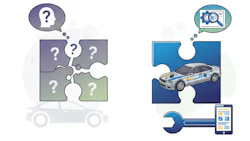
Today, customers are making decisions differently and the biggest reason is AI. Not AI as a buzzword, but AI as something that now sits between the customer and your business. Whether shop owners realize it or not, AI is already influencing who gets recommended, who gets called and who gets ignored.
This is not about trends or future predictions. This is about what is happening right now and why many shops that did everything “right” a few years ago are starting to feel confused about where their leads went.
WHAT CUSTOMERS DO DIFFERENTLY AFTER AN ACCIDENT
After an accident, people are stressed and overwhelmed. They want answers quickly. In the past, that meant searching for something simple like “bodyshop near me” and clicking through a few websites. Today, people ask much more specific questions. They want to know which shop is certified by their vehicle’s OEM, which one handles insurance disputes well, which one is honest about pricing and which one can get the car back quickly.
Instead of clicking 10 links, they expect AI to explain their options and point them in the right direction. That single change reshapes the entire marketing funnel.
WHY RANKING ON GOOGLE IS NO LONGER THE WHOLE STORY
AI does not simply list businesses the way Google used to. It evaluates them.
It pulls information from reviews, Google Business Profiles, websites, photos and thirdparty sources, then summarizes everything into a recommendation. In many cases, the customer makes a decision before ever visiting a website.
SEO did not stop working, but it stopped being enough on its own. Ranking well for a keyword does not guarantee visibility the way it used to, especially when AI answers the question directly on the search page. Many searches now end without a click at all.
That does not mean the customer disappeared. It means the decision happened earlier, with less effort.
HOW AI DECIDES WHICH SHOPS TO RECOMMEND
What matters now is not just whether a shop shows up, but whether AI understands what that shop actually does and trusts it enough to recommend it.
Reviews illustrate the shift clearly. AI reads them for meaning, looking for patterns around communication, honesty, repair quality, turnaround time, insurance handling or vehicle type.
A short review that says “great shop” carries little weight. A review that explains what was repaired, how long it took and how the customer was treated carries real weight.
WHY PHOTOS AND PROFILES MATTER MORE THAN MOST SHOPS THINK
Photos play a bigger role than many shop owners realize. AI does not just display them. It analyzes them.
Real photos of repairs, equipment and the actual workspace send stronger trust signals than stock images or outdated shots.
The Google Business Profile has become a primary source AI uses to understand a business. Incomplete or inactive profiles reduce confidence. When AI is unsure, it moves on.
WHAT THE WEBSITE’S ROLE HAS BECOME
Websites still matter, but their role has changed.
They are no longer the main discovery tool. They are validation tools. When someone clicks through, they are often already interested. They want confirmation. They want to see certifications, experience, process and professionalism.
If the site is slow, confusing or vague, trust drops quickly. Clear language matters more than clever wording. AI favours sites that explain things plainly and consistently.
WHY LEAD SPEED NOW BEATS ALMOST EVERYTHING ELSE
One of the biggest shifts shop owners feel but do not always connect to AI is lead behaviour.
Leads coming in today are often more qualified than before. The customer already understands more. They already compared options. But they also expect speed. AI answers instantly and that sets the expectation. Shops that take hours or days to respond lose those leads, even if their work is excellent.
Speed to lead has become one of the most important competitive advantages and it has nothing to do with ad spend.
THE QUIET RETURN OF OUTBOUND MARKETING
Another shift happening quietly is the return of outbound marketing, but in a very different form.
This is not about blasting ads or cold calling. It is about targeted outreach that highlights real strengths like OEM certifications, advanced training, EV repair, ADAS calibration or insurance expertise.
AI helps identify who should hear that message, but the message still needs to be real and specific. This is where many shops struggle, not because the tools do not exist, but because the strategy and execution take time and focus.
WHAT AI IS REALLY REWARDING
At its core, AI is changing marketing from promotion to proof.
It rewards businesses that are easy to understand and easy to trust. Shops that clearly show what they do, who they help and why customers trust them are being amplified. Shops that rely on vague messaging or outdated tactics are slowly fading, even if their repair quality is high.
THE REAL OPPORTUNITY FOR BODYSHOPS RIGHT NOW
This does not mean the opportunity is gone. In fact, the opposite is true.
The gap between shops that adapt and shops that do not is getting wider. The challenge is that adapting now requires a deeper understanding of how all these pieces connect and most shop owners simply do not have the time to manage that on top of running a business.
AI did not make marketing harder. It made weak foundations visible.
The shops that focus on clarity, consistency, trust and fast response are winning. The ones that chase tactics without fixing the fundamentals are frustrated.
The rules changed. The work changed. And the shops that recognize that early will stand out more than ever.

• Keep Google Business Profiles complete, accurate and updated regularly
• Encourage detailed customer reviews that explain the repair, communication and timeline
• Upload real, recent photos of repairs, equipment and the actual facility
• Clearly list certifications, OEM approvals and repair specialties
• Use plain, consistent language across your website and profiles
• Respond quickly to calls, emails and online inquiries
• Keep hours, services and contact details consistent across platforms
• Show evidence of active operations, not stock images or generic claims