HOW ACX BUILT A COLLISION PLATFORM WORTH WATCHING
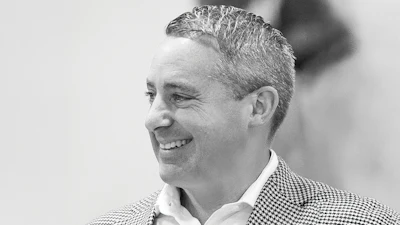
Arthur Crawford, president of collision operations (ACX) at AutoCanada, sat down with CRM publisher Darryl Simmons to talk about what it actually takes to build a collision operation at scale. ACX went from 18 rooftops and a money-losing vertical to 33 locations and $177 million in annual revenue. The conversation covered people, platform, tailwinds and the financial strategy driving it all.
DARRYL SIMMONS: Art, let's start at the beginning. When AutoCanada got serious about collision, what did that actually look like on the ground?
ARTHUR CRAWFORD: We started this journey in 2018 with 18 collision centres. Only three of them were OEM certified. And the vertical was losing money. So we weren't sitting on a winning hand, we were building one from scratch. We put an operational support team in place, integrated our management system, integrated accounting and consolidated vendors. But probably the single biggest lift was getting every collision centre certified in their most respected brands. Within two years, we started making money. And over the last five years, the team has accelerated our results year over year.
DS: The numbers you're putting up are hard to ignore. Revenue up five times, from $34 million to $177 million, with less than double the rooftops. How do you grow revenue that fast without just buying your way there?
AC: We went from 18 to 32 rooftops, which is less than double. But revenue is up five times. That's what a platform does. You stop thinking about each location as a standalone business and start thinking about what they accomplish together. We now have 22 unique insurance partnerships. We manage 26 OEM certifications covering 37 brands. No independent shop can replicate that. The platform creates leverage that a single rooftop never could. And on top of the revenue, we have delivered record profits year over year. In 2018, we were in the red. That shift didn't happen by accident.
DS: A lot of operators hear "platform" and assume it's just corporate language for a big org chart. What does it actually mean day to day?
AC: It means you're greater than the sum of your parts. When you add a new location, you're not starting from zero, you're plugging into something that already works. Consolidated vendors, shared systems, trained people, established insurance relationships, etc. The new rooftop gets all of that on day one. Without the platform, you're adding complexity and cost every time you grow. With it, you can scale without your margins collapsing. We are a true platform. That's the difference.
DS: You're talking about adding 50 more locations over the next three to four years. That's an aggressive target. What has to be true organizationally for that to actually work?
AC: The structure has to be scalable before the growth happens, not after. You need clearly defined roles and responsibilities. You need decision-making that doesn't bottleneck at the top. You need accountability built into how the organization actually runs. If your org structure can't absorb more volume and complexity without adding cost at the same rate, you don't have a platform, you have a bigger mess. So we've been deliberate about building that foundation first. The goal is to take on more without slowing down.
DS: You've made the point that there's no playbook for collision the way there is for franchise dealerships. That's a real gap. How have you tried to fill it?
AC: You have to build your own. The OEMs provide support on how to operate a franchise dealership. For collision, nothing exists. So we developed role-specific training internally. We put our team through Lean Six Sigma training annually, and we built a leadership program specifically for our managers. It is designed to help them drive performance at work and in their personal lives. The two aren't as separate as people think. If someone is struggling personally, it shows up at work. We want to develop the whole person. That investment pays back.
DS: Talent shortage is something everyone in this industry talks about. Not everyone does much about it. What is ACX actually doing?
AC: A few things. First, you can't just poach from competitors indefinitely. That's not a talent strategy. It's a short-term fix that hurts the whole industry. You have to bring new people in and develop them properly.
So we built our own apprenticeship program. Every apprentice gets a fully equipped Mac toolbox from the start worth about $10,000 in value. We support them through OEM training and I-CAR training. We give them what they need to actually succeed.
We also support Skills Canada participation. One of our apprentices, Ethan, is travelling to Shanghai later this year to compete at the World Skills competition. That's not just a great story, it's proof that when you invest in young people properly, they rise to the level you set for them.
DS: Tell me about the Women's Collective. In a male-dominated industry, why was that a priority?
AC: Because we have a talent problem in the industry, and half the population isn't being effectively recruited or retained. It's that straightforward. The Women's Collective has four specific goals: combating isolation, providing mentorship and guidance, addressing gender-specific concerns and building confidence. Women in our centres often don't have peers around them going through the same things. That isolation is real and it affects retention. The collective gives them a community and a voice. The centres that figure out how to attract and keep women in this industry are going to have a serious competitive advantage on the talent side.
DS: Let's talk about the industry tailwinds. There's been some real nervousness in the industry about volume over the next few years. What's your read?
AC: Over the next few years, we expect revenue to rise, but volume to soften. OEM certification is raising the standard of repair across the board. The car park keeps getting more complex. ADAS is going to hit 70%+ of vehicles in the next couple of years.
These aren't headwinds, they're tailwinds, if you're positioned to ride them. But you have to invest. Tooling, equipment, training. The shops that hesitate are the ones that will fall behind.
Hail is also a much bigger deal than most people treat it. Losses from hail damage have gone from about a billion dollars in the early 2000s to $15 billion annually. 12% of all auto comprehensive insurance claims are now hail-related, and those claims are 22% more severe than conventional collision repairs. That's not a niche. You don't need to build a hail company to ride this tailwind, but you absolutely need a solid hail management partner at your side.
DS: ADAS calibration and glass repair keep coming up as emerging profit centres. How real is the opportunity?
AC: Very real. We're in a technical arms race, but for shops that invest properly, ADAS, glass, etc. are a margin expansion tool. These repairs can increase the value of every repair order.
The complexity that frustrates some operators is actually the thing that creates separation between shops that are ready and shops that aren't. If you've got the equipment, the training and the certifications, that complexity works in your favour.
DS: Last question: the financial strategy. Walk me through multiple arbitrage for shop owners who haven't heard the term.
AC: Multiple arbitrage is when you buy a collision centre at fair market value. You plug it into your platform, gain synergies, and the effective EBITDA multiple drops. Then, if or when you roll up enough of them, say 100 centres, the combined entity gets valued at 12x to 14x EBITDA. That gap between what you paid and what they're worth is where the value gets created.
Canada is still a fragmented market. There are motivated sellers everywhere. Independents are facing a technical complexity problem that their capital alone can't solve. That's our runway. Boyd/Gerber, Caliber, Crash Champions have proved this model works. We're executing a proven strategy.
DS: Art, thanks for the time. You've clearly got a long view on where this goes.
AC: The challenges are real, nobody's pretending otherwise. But so is the opportunity. Build the engine, add the fuel, get some momentum and use the Financial Strategy. That's the formula. We're not finished. We're just getting started.