The Value of Hands-On Training in Today’s Collision Repair Industry
By Ryan Marrinan, Application Engineer, Training and Education, 3M Automotive Aftermarket Division
As the collision repair industry faces a growing technician shortage and rapidly evolving vehicle technology, structured, hands-on training has become essential. While digital learning offers convenience, it cannot always replace the depth of understanding and skill development achieved through practical, instructor-guided experiences. For shop owners and technicians considering training solutions, hands-on training can offer several benefits, including superior learning outcomes, stronger workforce capabilities and greater alignment of repairs to OEM procedures and safety requirements.
The industry is experiencing an urgent need for qualified collision repair technicians. Many new technicians enter the field because they want to work with their hands, yet their training environments can often rely heavily on virtual or online instruction. While digital tools have value, it’s not always possible for them to replicate the learning that occurs when technicians apply procedures directly and receive immediate feedback while using the equipment and materials found in modern collision repair facilities.
WHY HANDS-ON TRAINING MATTERS
1. Higher Knowledge Retention
Technicians can learn more effectively through direct practice. Hands-on exercises may reinforce proper techniques, correct ineffective habits and help learners connect concepts to real-world applications. When technicians physically carry out structural repairs, welding operations or aluminum processes, they have the potential to retain substantially more knowledge than they would from passive methods such as videos or virtual sessions.
2. Direct Access to Expert Instructors
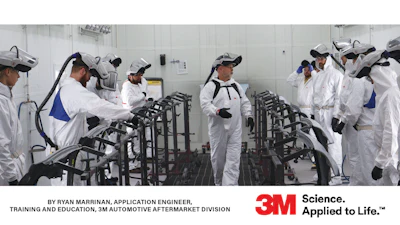
Direct access to instructors during hands-on training ensures technicians receive real-time evaluation and guidance. Working side by side allows instructors to immediately confirm correct techniques or address areas needing improvement, which reinforces confidence and deepens understanding of OEM required repair procedures. This immediate, practical interaction plays an essential part in developing technicians who can consistently perform safe, accurate and high quality repairs.
3. Peer Networking and Shared Best Practices
Training groups often include participants from shops nationwide. As technicians collaborate, they share techniques, shop processes and practical insights they may not encounter within their own facilities.
These interactions frequently extend beyond the training session, forming long-term professional networks that support continued growth and development.
4. Exposure to Advanced Tools and Materials
Shops differ significantly in their equipment and capabilities. A dedicated training centre can provide access to advanced tools technicians may not have in their own facilities, such as self-piercing rivet systems, squeeze type resistance welders, MAG welders, specialized aluminum repair tools, dent pulling equipment or ADAS systems for ADAS-focused courses. This exposure expands their technical skill set, prepares them for current and emerging vehicle technologies and enables them to return with informed recommendations on equipment, tools or systems that may benefit their shops.
5. Reduced Distractions and a True Learning Environment
Training within an active shop often leads to frequent interruptions. A purpose built training centre removes these distractions, allowing technicians to focus entirely on learning, practice and application. This controlled environment improves learning efficiency, provides a safe space to make mistakes and reduces the risk of rushed or incomplete understanding.
Many technicians benefit from training environments that provide structured, hands-on instruction tailored to the job roles and responsibilities they perform each day. As vehicle technology advances and repair expectations increase, practical skill development is essential for ensuring safe, accurate and efficient repairs. Technicians who engage directly with tools, materials and procedures develop deeper understanding, stronger confidence and a higher level of repeatability in their work. Hands-on upskilling allows them to connect theory to real world application, correct ineffective habits and build proficiency across the full spectrum of repair tasks.
WHERE HANDS-ON DEVELOPMENT CAN BE MOST IMPACTFUL
For body repair and structural work, technicians should gain exposure to performing actual structural procedures such as sectioning, weld removal, welding through adhesives and completing test welds. Understanding the reasoning behind each step — including proper cutting strategies, avoiding damage to reinforcement panels and interpreting OEM repair information — is critical for high quality structural performance.
Aluminum repair requires a similar level of practical engagement. Because aluminum behaves differently from steel, technicians need opportunities to work directly with its unique grain structure, understand work hardening and practice controlled heat management, proper bonding, rivet bonding and flow form riveting using specialized tools.
Welding continues to be one of the most significant skill gaps in the industry, making dedicated welding practice essential. Technicians can benefit from time spent setting up welders correctly, performing destructive testing and gaining a strong understanding of weld theory and execution. Practical welding development not only strengthens fundamental capability but also supports those seeking welding certifications or completing OEM specific requirements. In paint and refinish roles, technicians should receive hands-on instruction that reinforces core refinishing skills, including feathering, priming, blocking, masking, undercoat application, texture matching, booth cycle efficiency, spot repair, blending and paint correction.
Direct practice in these areas can help ensure consistency, high quality finishes and contributes to more efficient overall shop workflow. Estimating and repair planning personnel can also benefit from practical training that strengthens communication and improves accuracy in documenting and transferring OEM required procedures. Understanding commonly missed operations, and how they translate into technician tasks, supports more efficient shop processes and better outcomes for both customers and repair teams.
Finally, educators and instructors play a key role in developing the next generation of technicians. Comprehensive, hands-on training helps ensure they remain aligned with current repair methods, tooling requirements and industry expectations, strengthening the talent pipeline and helping the industry maintain a high standard of repair excellence.
This broad approach to hands-on upskilling supports technicians across all roles, preparing them for modern vehicle technologies and ensuring consistently safe, high quality repairs.