The Automotive Recyclers Association's 83rd annual convention highlighted the Global Circularity Consortium's efforts to connect recycling, insurance, repair, and technology sectors to increase the use of quality recycled OEM parts in vehicle repair through common data standards and shared accountability.
- The Global Circularity Consortium brings together recycling, insurance, repair, dealer, and technology perspectives to support a circular economy in automotive.
- Key consortium priorities include common data standards, traceability, shared accountability, and collaboration to support reuse and recovery of vehicle parts.
- The Ontario Automotive Recyclers Association was recognized for leading roundtables and working groups that advance recycled parts adoption among recyclers, insurers, and repairers.
- The convention's education program covered AI, inventory workflow, sales, marketing, financial performance, and leadership to support diverse business operations.
- Canadian recyclers are positioned to contribute to and benefit from international circularity initiatives while strengthening demand for quality recycled parts.
Solera’s Global Circularity Consortium, an outstanding trade show and a broad range of learning opportunities were among the highlights of my visit to the Automotive Recyclers Association’s 83rd annual convention and exposition in Atlanta, Ga.
The convention brought together people developing new tools for our businesses and those working to expand the role of recycled parts in vehicle repair.
A wider conversation about circularity
One of the strongest sessions for me was the Global Circularity Consortium breakfast and panel, moderated by Jing Liao, chairwoman of the Solera Foundation and chief administrative officer at Solera. Bringing together recycling, insurance, repair, dealer and technology perspectives made this a particularly worthwhile discussion.
The consortium’s work centred on connecting organizations across the vehicle life cycle to support a more circular economy. Its published priorities included common data standards, traceability and shared accountability, along with collaboration to support reuse and recovery. For recyclers, this offered an opportunity to help shape how those connections would work in practice.
For our members, the goal was straightforward: make it easier for quality recycled original equipment manufacturer (OEM) parts to be considered and used in appropriate repairs. That required confidence in the parts, useful inventory information and cooperation among the businesses making repair and purchasing decisions. I was encouraged to see these different interests brought into the same conversation.
I was particularly encouraged by feedback that Canada was ahead of the curve in this work. The Ontario Automotive Recyclers Association (OARA) was congratulated for its efforts to host roundtables and working groups that brought recyclers, insurers and repairers together to advance the use of recycled parts.
We were encouraged to have the ARC join the Global Circularity Consortium, both to learn from others and to share our experience. That is an opportunity we intend to pursue. I look forward to continuing the conversation with Jing and the Solera team about how Canadian recyclers can contribute to and benefit from this collaboration.
An outstanding trade show
The trade show was another highlight. Vendors presented a wide range of products and services, with plenty to consider for recyclers planning their next business investment. There were opportunities to explore technology, ask questions and see how different tools might fit into day-to-day operations.
The show offered the chance to speak directly with suppliers and compare approaches in one place. That was especially useful when considering changes to inventory processes, sales systems or workflow that would need to fit the people and systems already in a business.
Learning across the business
The education program covered much more than one department or type of operation. Artificial intelligence (AI) and inventory workflow sat alongside sales, marketing, financial performance and leadership, giving owners and staff a broad choice of sessions.
The agenda included Mariah Yazzie’s session on turning data into decisions and Mike Kunkel’s presentation on metrics for running a business at a high level. AI appeared both as a business opportunity and as a subject requiring attention to data and intellectual property protections.
Sales and marketing were well represented. Jer Banta’s sessions included “Building sales from the ground up!” and “The difference between you and the next guy.” There was also a panel on marketing, social media and storytelling, a sales coaching session with Chris Daglis, and sessions on eBay growth and its Certified Recycled program.
Other offerings addressed workplace culture, emerging leaders, family business transitions, quality compliance, collision industry trends and the economics of battery electric vehicles. The range reflected the many different skills involved in operating a successful recycling business.
Sharing the Canadian perspective
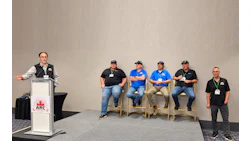
I also had the opportunity to participate in the Auto recycling around the world panel. The discussion explored the opportunities and operating conditions facing recyclers in international markets and gave me a chance to contribute the Canadian perspective.
These exchanges allowed us to learn how others approached the business while recognizing the conditions in each market. Our participation also helped ensure Canadian experience was part of the wider industry conversation.
My thanks to the ARA, the speakers, exhibitors and volunteers who made the convention possible. I came home with ideas to share and conversations to continue, particularly around the Global Circularity Consortium and the opportunity to build stronger demand for quality recycled parts.