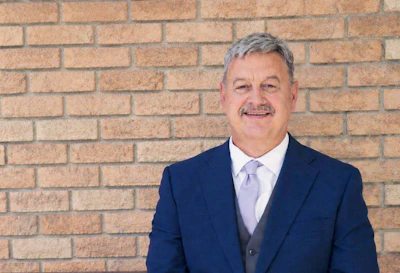
Guy Cormier, a collision repair technician with over 50 years of experience, is gradually retiring at 65 while transitioning into a teaching and troubleshooting role. His career has profoundly influenced the industry, with more than 10 trainees he mentored remaining in the field and rising to leadership positions.
- 50+ years of collision repair experience, starting at age 7 with his father in the garage
- Trained more than 10 industry professionals who remained in the field, many now holding leadership roles at major repair shops
- Specializes in structural repair and has contributed to body repair products, processes, and insurance investigations
- Transitioning to less physically demanding work focused on teaching, troubleshooting, and traveling between shop locations
- His mentorship approach emphasizes hands-on learning and understanding repair procedures rather than quick answers

Guy Cormier, who turns 65 on Oct. 22, remains a technician at Assured in Markham. His daughter Amanda Cormier says he hopes to spend a final chapter of his career teaching and troubleshooting before retiring.
“He’s still working today,” she says. “He’s hoping to gradually move into something less physically demanding — perhaps a role where he can travel, teach, troubleshoot and help shops.”
That transition would build on responsibilities he has already taken on. Amanda says her father has travelled between Assured locations to tackle production problems and improve operations. His work has also included repair investigations for insurers and contributions to body repair products and processes.
His influence has often become apparent to her through conversations with other people in the trade.
“Almost everywhere I go, someone recognizes my last name and asks, ‘Are you related to Guy Cormier?’” she says. “I hear the same thing over and over again: how much they respect him, how much he has taught them, and how much he has helped them.”

Cormier recalls training brothers Paul and Domenic Prochilo in management and repair planning. The brothers later co-founded Simplicity Car Care with their cousin, Domenic Ieraci.
Other former trainees now hold responsibilities within Assured. Amanda identifies Mohammed Bisnauth, district manager for Toronto North, Kiefer, manager at Assured Woodbine, and Brian Mcgale, who works in production control.
Cormier estimates that he has trained more than 10 people during his career. Almost all, he says, have remained in the industry. He still has a trainee working alongside him.
“They always put a young kid with me that wanted to go in the industry,” he says.
His own introduction came through his father, a mechanic who also did bodywork. According to a story his mother later told him, Guy was about seven when his father handed him sandpaper and showed him how to sand a truck.
By about 14, he was working in his father’s garage on cars, transport trucks and dump trucks. At 16 or 17, he was repairing and painting vehicles for a dealership’s sales lot.
An Acadian, Cormier later moved to Toronto. Early work included repairing and painting trucks for a garbage company before he joined collision repair shops.
Structural repair became a specialty. At JJ Collision, he recalls spending six or seven years straightening damaged vehicles before passing them to colleagues for bodywork and preparation. Employers also encouraged him to obtain his trade qualification and take I-CAR courses.
“So I never stopped,” he says.
He later worked at Assured Meadowvale, where body technician Joe Potroco was a colleague more than 20 years ago. His working relationships also include Aviva appraiser Mark Birbal and Assured Downtown painter James Trobiano, whom Amanda identifies as friends and former colleagues.
For Amanda, the lessons began at home. At about six, she was learning to remove wheel nuts with a lug wrench. Later, her father taught her to change oil, diagnose problems and understand vehicle construction.
“Even when he was teaching me to drive, he would explain how a vehicle reacts during a collision and why it behaves the way it does,” she says.
He suggested appraisal work when she was considering her options after high school. Her first collision industry job was as a dismantler at Prochilo Brothers Auto Collision on Toryork Drive, working alongside her father and her uncle, Stéphane Savoie. She eventually became an estimator.
Other appraisers received similarly practical instruction. Amanda recalls one describing how Cormier had him remove spot welds from a panel and taught him to weld so he could understand the work behind an estimate.
“He wanted people to understand the work, not simply talk about it or write about it on an estimate,” she says.
A serious foot injury eventually forced Cormier to rethink his own working methods. Amanda says he reorganized his tools on a cart and changed his techniques to accommodate his physical limitations.
“He eventually asked himself a simple question: ‘I can’t keep doing this. How can I make this easier?’” she says.
The adjustments helped him continue working. His advice to younger technicians is to develop efficient habits while protecting the rest and concentration the job requires.
“You don’t need to do overtime,” he says. “You need to be properly rested, have your mind into it and concentrated.”
He also expects experienced colleagues to adapt as vehicles change. At his current shop, technicians watch his work and ask questions about panel fit, alignment and finishing.
“You cannot just go and mud a quarter panel like crazy and get away with it,” he says. “You have to do proper procedure and work.”
As he works toward retirement, teaching offers a way to continue passing on those lessons with less physical strain.
“He’ll explain his thinking, share his experience and help them work through it rather than simply giving them a quick answer,” Amanda says.