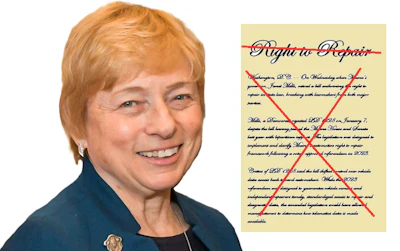
Toronto, Ontario -- Maine lawmakers have voted to override a veto by Governor Janet Mills, allowing changes to the state’s automotive right to repair law to take effect despite her objections.
The Maine House of Representatives voted 96–44 to override Mills’ veto of LD 1228, a bill that revises how vehicle repair and diagnostic data is shared with vehicle owners and independent repair shops. A two-thirds majority is required to override a veto under Maine law. The vote was bipartisan, with lawmakers from both major parties on each side.
The legislation follows a 2023 voter referendum that required automakers to provide vehicle owners and independent repairers access to repair and diagnostic data generated by modern vehicles, including data transmitted wirelessly through onboard telematics systems. That referendum made Maine the first U.S. state to mandate access to telematics data for repair purposes.
LD 1228 changes how that access is implemented. Instead of requiring a single standardized system for telematics data, the law allows automakers to determine the method by which data is made available, provided access is offered.
Mills vetoed the bill on January 7. In her veto message, she said the legislation departed from what voters approved. “Without timely access to vehicle data, independent auto shops are left at a significant competitive disadvantage, and consumers would have fewer choices for automotive service and repair,” she wrote. Mills also said the telematics provision was not part of the unanimous recommendations of a post-referendum working group and was added at the urging of automakers.
The legislature’s override means the bill becomes law despite the governor’s objections.
Groups representing independent repairers supported the veto and opposed the override. In a public statement, officials from the Auto Care Association said overturning the veto “undermines the will of Maine voters” and changes the structure of the right to repair law approved at the ballot box. The association said the revised approach risks limiting how independent repairers access vehicle data needed for diagnosis and repair.
Automakers supported the override. In a public statement, officials from the Alliance for Automotive Innovation wrote that Maine’s original law raised privacy and cybersecurity concerns. The group has said it supports “a workable framework that protects consumer privacy and vehicle security while enabling lawful access to repair information.”