The U.S. House Energy and Commerce Committee has added narrower automotive right-to-repair language into a wider bill.
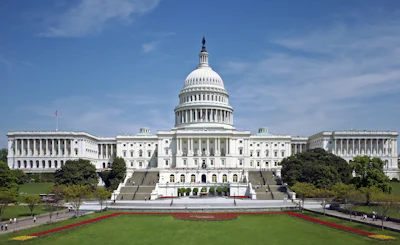
The committee voted 48-1 on May 21 to advance H.R. 7389, the Motor Vehicle Modernization Act of 2026. The bill includes right-to-repair language, but does not include several provisions from the broader REPAIR Act backed by Rep. Neal Dunn, a Florida Republican, and aftermarket groups.
The U.S. bill would place parts of two existing repair agreements into federal law. One covers vehicles weighing under 14,000 pounds. The other covers vehicles weighing more than 14,000 pounds. The bill would give the Federal Trade Commission power to enforce those requirements.
The bill does not directly require automakers to provide vehicle owners or independent repairers with access to wirelessly transmitted vehicle data. Instead, it directs the FTC to study several aftermarket issues, including telematics, repair data, parts access, tools, software and the effect of modern vehicle technology on repair work.
That has drawn criticism from groups that supported the broader REPAIR Act. Auto Care Association President and CEO Bill Hanvey said the provision “falls short of establishing all of the fundamental protections that American vehicle owners and independent auto shops need amidst growing repair barriers and rising costs.”
Hanvey said Auto Care believes the 2014 agreement must be updated to reflect changes in vehicle technology.
CAR Coalition Executive Director Justin Rzepka also criticized the committee language. “Codifying a 2014 MOU does nothing to expand consumer choice and instead hands automakers a costly repair monopoly,” Rzepka said.
The CAR Coalition said U.S. repair costs have risen 48% since 2020. The coalition also said the 2014 agreement does not cover several current vehicle systems, including ADAS sensors, cameras, radar systems, calibration requirements, telematics and wireless data transmission systems.
Dunn has framed the broader REPAIR Act as a vehicle data issue.
“If you own your car, then you should own the data generated by your car, specifically critical repair, maintenance, wear and tear, calibration, and recalibration of parts,” Dunn said in an earlier statement. “This is the basic concept of ownership.”
H.R. 7389 also includes the ADAS Functionality and Integrity Act. That section would require the National Highway Traffic Safety Administration to study how common vehicle modifications affect advanced driver-assistance systems.
In Canada, CASIS is the repair-access system cited by both aftermarket and automaker groups. It is a voluntary agreement intended to provide independent repair businesses with access to service information, diagnostic tools and training. AIA Canada has argued that right-to-repair legislation is needed because connected vehicles create repair-access issues that CASIS does not fully address.
The Canadian Vehicle Manufacturers’ Association has taken a different position. In a 2024 fact sheet, the association stated that CASIS supports an open and competitive repair market and that diagnostic and repair information for electric vehicles is available under the system. The association also stated that independent repair shops perform 70% of post-warranty vehicle repair in Canada.
The U.S. bill now moves to the full House.