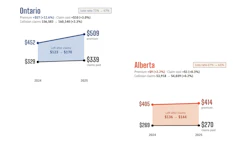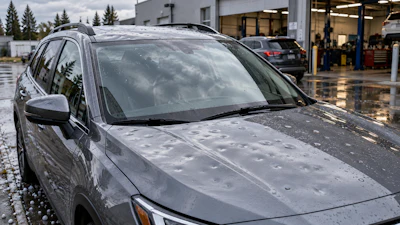
Alberta recorded $145.1 million in hail damage claims between January and June 2026, making it Canada's hardest-hit province for weather-related vehicle damage, according to CARFAX Canada vehicle history data.
- Alberta led Canada with $145.1 million in hail damage claims from January-June 2026
- Wind damage added $4.7 million to Alberta's total, bringing weather-related costs to nearly $150 million
- Ontario followed with $18.5 million in hail damage and $4.5 million in wind damage
- Vehicles with damage histories sold for an average of $6,400 less than undamaged vehicles in August 2026
- Used vehicle sales declined 6.9% month-over-month while inventory increased 18.9% in August
Hail and wind damage have accounted for nearly $150 million in Alberta in vehicle records reviewed by CARFAX Canada between January and June 2026.
Hail made up $145.1 million of that total, with wind damage adding $4.7 million. Alberta had the highest weather-related damage costs in the figures released Oct. 1.
Ontario followed with $18.5 million in hail damage and $4.5 million in wind damage. Quebec recorded $829,000 in hail damage, while Nova Scotia’s wind-related costs reached $796,000.
Across all accident types, 393,200 vehicles had previous accidents recorded, with associated damage costs totalling approximately $5.4 billion. Alberta, Ontario and Quebec had the most vehicles with accident histories.
The review covered vehicle histories checked during the first six months of 2026. The release did not give dates for the individual damage events.
“When a consumer is made aware of previous damage to a vehicle, they can take the steps to ask additional questions so they can feel more confident when buying a repaired vehicle,” said Shawn Vording, president of CARFAX Canada.
The effect of damage history on asking prices appears in CARFAX Canada’s separate fall Used Vehicle Market Insights report.
In August, vehicles without reported damage were advertised for an average of approximately $6,400 more than vehicles with damage histories. That gap had narrowed from more than $7,200 a year earlier.
The figures compare advertised vehicles with different histories. They do not assess the quality of completed collision repairs.
The smaller price gap came as used-vehicle sales slowed and available inventory increased.
August sales totalled 258,202, down 6.9% from July and 6.6% from August 2025, in figures announced Oct. 15.
Inventory rose 18.9% in a month to 228,788 listings, its highest level this year. Available stock nevertheless remained 4.6% below a year earlier.
Asking prices barely moved. The national average was $30,776, down 0.3% from July and 2.7% year over year.
“Sourcing the right inventory remains one of the biggest challenges facing dealers today. In a market where consumer demand continues to evolve, every inventory decision carries greater weight,” Vording said.
SUVs accounted for 56% of listed inventory. Trucks carried the highest average asking prices among the major vehicle segments, while vans were the only major segment with year-over-year price growth.
Used EV asking prices fell faster than the overall market, declining 1.8% from July and 5.4% from August 2025. Tesla vehicles accounted for 64% of EV listings.