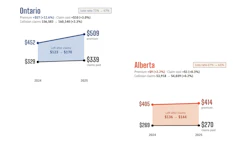
Canadian motorists are facing continued pressure on auto insurance premiums as higher claims and operating costs work their way into policy prices.
Randall Bartlett, deputy chief economist at Quebec-based financial cooperative Desjardins, examined those pressures in an analysis released on Oct. 10. His findings explain why slower inflation does not necessarily bring immediate relief for policyholders.
Bartlett wrote that “elevated overall inflation feeds into rising operating and claims costs.”
Canadian consumer prices have increased more than 24% since the start of 2020. Insurance premiums typically respond with a delay, as insurers incorporate higher costs into pricing over time.
Auto insurance followed an uneven path through the pandemic. Prices initially fell as restrictions kept drivers at home. Premium growth accelerated when driving resumed and claim frequency rebounded, eventually catching up with the broader increase in consumer prices.
Vehicle theft added another pressure. Bartlett identified the post-pandemic surge as an important contributor to higher auto premiums. Early indicators suggest theft may be stabilizing or declining, but levels remain above historical norms.
There is some potential relief ahead. Growth in vehicle and parts prices has slowed since 2023, which could moderate future auto insurance increases. However, Bartlett does not expect the wider post-pandemic increase in prices to reverse.
Across all insurance categories, Canadian household spending reached $38.4 billion in 2025. That amounted to approximately $2,200 per household, compared with $1,850 in 2019. Those figures include life, health, property and transportation insurance, rather than auto coverage alone.
After accounting for premium increases and household growth, insurance purchases per household still rose by approximately 1% annually over that period.
Home insurance has followed a steeper trajectory than auto coverage. Property insurance prices have risen at nearly twice the pace of general prices, reflecting higher rebuilding costs and weather-related claims.
Bartlett expects employment gains and renewed population growth to support demand for coverage, alongside continued pressure on premiums. He wrote that “insurance spending will continue to rise in Canada in the coming years.”
The debate over premiums also includes criticism of how repair bills are assessed and paid. In March 2025, Alberta auto insurance lawyers Travis Bissett and Terrance Kutney argued that stronger scrutiny of bodyshop billing could help improve insurance affordability.
Writing in Law Matters, the Canadian Bar Association’s Alberta publication, the Stringam LLP lawyers urged insurers to investigate inflated damage assessments and questionable repair charges more closely. Their argument was that reducing those costs deserved greater attention before restricting compensation for injured motorists.