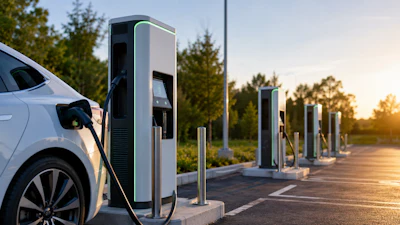
Canada has announced $10.9 million in federal funding for 22 electric vehicle infrastructure and education projects, including nearly 400 new chargers and awareness programs to increase EV adoption across the country.
- $10.9 million announced by the federal government for EV infrastructure and education projects across Canada
- Nearly 400 electric vehicle chargers will be installed through nine projects funded by the Zero Emission Vehicle Infrastructure Program
- $2 million allocated to 13 education and awareness initiatives to increase familiarity with electric vehicles
- Canadians can save between $23,000 to $32,000 over 10 years by driving electric compared to gas vehicles
- British Columbia has expanded public charging ports by 87% since 2023, now exceeding 8,900 ports
The federal government has announced $10.9 million for 22 electric vehicle infrastructure and education projects across Canada. The announcement was made in British Columbia by the Honourable Julie Dabrusin, Minister of the Environment, Climate Change and Nature.
“We're investing in more electric vehicle chargers across the country, making it even easier for Canadians to get to where they live, work, and play. Together with our Auto Strategy, we’re creating good jobs, strengthening Canada’s economy, and building a strong and climate-competitive future.”
The funding announced today includes almost $9 million to install nearly 400 chargers across Canada through nine projects funded by the Zero Emission Vehicle Infrastructure Program. Additionally, around $2 million in funding will support 13 education and awareness projects that increase familiarity with electric vehicles and electric vehicle charging.
Electric Mobility Canada has received funding for two new projects. The projects include light-duty vehicle fleet charging resource hubs and advancing vehicle-grid integration in Canada.
“Electric Mobility Canada is grateful to the Government of Canada for supporting two practical, high-impact initiatives that will help accelerate transportation electrification across the country,” said Daniel Breton, president and chief executive officer, Electric Mobility Canada.
“The first will establish light-duty vehicle fleet charging resource hubs in the Prairies and the Maritimes, giving municipalities, public agencies, institutions, utilities, and commercial fleets the guidance, tools, and peer support they need to plan and implement charging infrastructure. The second will advance vehicle-grid integration in Canada by bringing utilities, regulators, automakers, and policymakers together around managed charging and bidirectional charging solutions that can improve affordability, reliability, and sustainability across the electricity system. Together with our partners, Electric Mobility Canada is proud to help build the knowledge, collaboration, and implementation capacity needed to make electric mobility work for communities across Canada.”
Many Canadians face roadblocks to accessing electric vehicle charging from home, Travis Allan, president and chief executive officer, Canadian Charging Infrastructure Council, addressed this issue.
“Driving electric can save a Canadian household between $23,000 and $32,000 over 10 years, but for the nearly one in three Canadian families who live in condominiums, stratas, and apartments, those savings can be out of reach. Every day, condo boards, property managers, and landlords ask our members the same question: What do we do when a resident wants to install electric vehicle charging? This guide, funded by the Government of Canada, will give them clear, practical answers, and help ensure the benefits of low-cost electric driving reach every Canadian, not just those with a driveway. We thank Minister Dabrusin and the Government of Canada for this important investment.”
In British Columbia, these investments build on the growth in electrification already taking place in the province, where there are now more than 8,900 public charging ports—an increase of 87% since 2023.
The Honourable Gregor Robertson, Minister of Housing and Infrastructure and Minister responsible for Pacific Economic Development Canada spoke about Canada’s transition to emission free transportation.
“With today’s announcement, we are accelerating the transition to zero-emission transportation across Canada through investments in electric vehicle infrastructure. By supporting the installation of electric vehicle charging infrastructure and increasing access to clean transportation options, we are making it easier for Canadians to choose electric vehicles and help build a cleaner, more sustainable future.