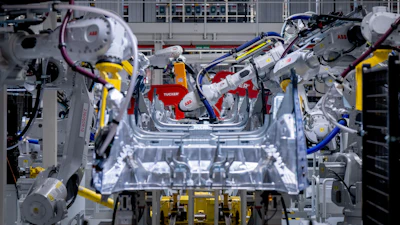
Volvo Cars is putting megacasting at the centre of its next-generation manufacturing strategy as it begins production of the fully electric Volvo EX60 at its Torslanda plant in Gothenburg.
The Swedish-based facility has undergone a significant transformation, anchored by the introduction of megacasting technology. The process allows large sections of a vehicle’s structure to be produced as single cast components, reducing the number of parts, simplifying assembly and improving production efficiency.
The investment is part of a broader SEK 10 billion (CAD 1.4 million) upgrade to prepare the plant for the EX60 and future electric models. Alongside megacasting, Volvo Cars has added a new battery assembly plant and overhauled its paint shop and final assembly operations.
The shift comes as the automaker ramps up EX60 production following stronger-than-expected demand across Europe. Orders have exceeded internal forecasts in most major markets, prompting plans to increase 2026 output and extend plant operations by an additional week this summer -- a first for the site.
“Today is an important milestone for our company and for Sweden as a whole, as we start to build the first EX60 customer cars,” said Håkan Samuelsson. “We are now focused on a steady ramp-up of high-quality EX60 production, making sure this game-changing car will be a profitable growth driver in the coming years.”
Larger, single-piece structural components can improve rigidity and manufacturing efficiency, but may also introduce new considerations for repairability and replacement, particularly in the event of structural damage.