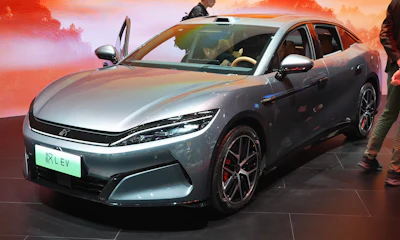
Most Canadian new-vehicle shoppers considering electric vehicle would be open to one manufacturered by Chinese brands, according to the JD Power 2026 Canada Electric Vehicle Consideration Study.
The study found 56% of Canadian shoppers who are “very likely” or “somewhat likely” to consider an EV would consider a Chinese EV brand. The model's lower price point was the dominant factor.
Across all new-vehicle shoppers surveyed, 31% would consider a Chinese EV brand.
JD Power also reported reasons shoppers gave for avoiding Chinese EV brands. The reasons included quality and reliability, security concerns and the lack of an established retail network and parts availability.
JD Power’s study page lists the 2026 study’s publish date as May 27, 2026. The company issued its public press release on May 28, 2026.
The release said 34% of new-vehicle shoppers in Canada are “very likely” or “somewhat likely” to consider an EV for their next purchase, up from 28% in 2025.
That six-point increase was the first increase in EV consideration since JD Power began tracking the measure in 2022, following several years of declining or flat consumer interest.
The Canada figure remained below the U.S. figure. JD Power reported 59% of U.S. shoppers were likely to consider an EV, unchanged from 2025.
In Canada, 47% of shoppers were “very unlikely” to consider an EV, compared with 20% in the U.S.
Quebec recorded the largest regional increase cited in the release, up 10 points to 42%.
JD Power Canada managing director J.D. Ney said fuel prices and incentives were contributing to the increase.
“A combination of steadily rising fuel prices and the return of tax credit programs like EVAP are spurring rising interest in EVs in Canada,” Ney said in the release. “But for most shoppers, the deciding factors remain everyday practicality: how far they can drive on a charge, whether charging is reliably available when needed and how EVs perform in Canadian winters. Even with available incentives, these issues will need to be addressed before many hesitant shoppers seriously consider an EV.”
JD Power said Canada’s Electric Vehicle Affordability Program, introduced earlier this year as a successor to the Incentives for Zero-Emission Vehicles program, is intended to expand access to incentives and lower upfront costs. The release said consumer awareness and understanding of the program remain limited.
Overall, 25% of new-vehicle shoppers said EVAP had positively affected their likelihood to consider an EV. Among shoppers already “very likely” or “somewhat likely” to consider an EV, that figure was 57%.
Among shoppers “very unlikely” or “somewhat unlikely” to consider an EV, limited driving distance per charge was the most frequently cited barrier at 65%. Lack of charging station availability followed at 56%. Inadequate performance in extreme temperatures, including cold or heat, was cited by 54%.
Purchase price no longer ranked among the leading reasons for low EV consideration, according to JD Power.
Cold-weather performance was identified in the release as a newly emerging leading barrier to EV consideration.
The findings on Chinese EV brands included both consideration factors and rejection factors. JD Power reported that price point was the dominant reason EV-considering shoppers would consider a Chinese EV brand. Perceived value proposition and in-vehicle technology were also listed as consideration drivers.
JD Power reported that quality and reliability, security concerns and lack of an established retail network and parts availability were frequently mentioned reasons for avoiding Chinese EV brands.
JD Power described the Canada Electric Vehicle Consideration Study as an annual industry benchmark for gauging EV shopper consideration. It also includes model-level consideration details, cross-shopping, “why buy” findings and reasons for EV rejection.
The 2026 study measured responses from 4,938 new-vehicle shoppers and was fielded in March and April 2026.