A significant overhaul of the Volkswagen Group's global vehicle lineup is underway -- a move that could drastically simplify parts ordering and repair processes.
The executive board for the OEM, which was founded in Germany in 1937, recently presented a comprehensive "future plan" that aims to reduce offering complexity — such as the number of available trim and equipment options — by up to 75%. The overall model lineup will also be gradually streamlined by up to 50%.
The strategic realignment is designed to build resilience and competitiveness in the face of geopolitical tensions, rising tariff costs and intensifying global competition, according to the official release.
"With our future plan, we are moving into the next phase of transformation by our own means," said Oliver Blume, CEO of the Volkswagen Group. "We are making the Volkswagen Group faster, more resilient and more competitive: through less complexity, focused technologies, an even stronger alignment of products ... and significantly leaner structures."
The sweeping plan includes 12 initiatives expected to be implemented by 2030. In addition to simplifying the product portfolio, key technologies will be standardized. Vehicle platforms, electronic architectures and software landscapes will be harmonized across the group to eliminate parallel structures and increase production synergies.
Global production footprints are also being scaled back. Before the COVID-19 pandemic, investments were made for a capacity to produce approximately 12 million vehicles annually. That capacity has since been reduced by two million units, and the target is now a steady output of roughly nine million vehicles per year. Further capacity adjustments are planned for facilities in Europe and China.
While the press release does not explicitly mention any Canadian facilities or potential job cuts in Canada, it does state that "development and indirect functions are being made more efficient" alongside a global reduction in "overcapacities." The document links the restructuring to securing the future of Germany as an industrial location, without addressing the status of employees in North America.
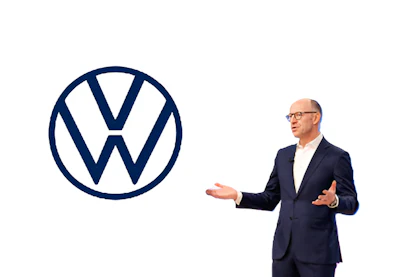
Arno Antlitz, CFO and COO of the Volkswagen Group (pictured), said previous cost-reduction programs are no longer sufficient given the current economic environment.
"We must instead fundamentally realign our business model and achieve structural, sustainable improvements," Antlitz said. "We can only achieve this by substantially reducing complexity — in our product portfolio and technology platforms, in the number of units and decision-making levels."
The group's investment portfolio is also being streamlined to focus on the core automotive business. In late June, an agreement was reached to divest a majority stake in Everllence, bringing in approximately €7.4 billion ($11.9 billion CAD) to strengthen the balance sheet.