Toyota Canada is recalling 8,646 Toyota and Lexus vehicles with Takata airbag inflators that can rupture and send metal fragments into the cabin during deployment. This recall extends an 18-year safety crisis involving millions of vehicles worldwide, with owners to be notified by January 11, 2027 for free replacement service.
- Toyota Canada recalled 8,646 vehicles with Takata airbag inflators that may rupture during deployment
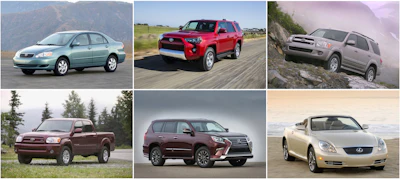
- Affected models include Corolla (2003–2008), 4Runner (2016–2017), Sequoia (2005–2007), Tundra (2005–2006), Lexus GX460 (2017), and Lexus SC430 (2002–2010)
- The defect involves ammonium-nitrate propellant that deteriorates under heat and humidity, causing metal housing rupture and metal fragment projection
- Takata pleaded guilty to wire fraud in 2017 for supplying false safety test data; the company supplied over 67 million recalled inflators in North America
- Free replacement service will be provided by Toyota and Lexus dealers; owners should verify recall status using their vehicle identification number
Toyota Canada has recalled approximately 8,646 Toyota and Lexus vehicles over passenger airbags that could send metal fragments into the cabin during deployment, extending a recall saga that began 18 years ago.
The Toronto-based vehicle distributor announced the campaign Nov. 13. The affected airbags contain Takata inflators whose propellant can deteriorate under certain temperature and humidity conditions, potentially causing the metal housing to rupture.
The Canadian recall covers selected vehicles:
- Toyota Corolla 2003–2008
- Toyota 4Runner 2016–2017
- Toyota Sequoia 2005–2007
- Toyota Tundra 2005–2006
- Lexus GX460 2017
- Lexus SC430 2002–2010
Toyota and Lexus dealers will replace the front passenger airbag inflator or the complete airbag assembly, depending on the model, at no charge. Owners are to be notified by Jan. 11, 2027.
The announcement follows years of recalls involving the Japanese safety-parts supplier. Transport Canada lists more than 8 million recalled Takata inflators in Canada. The U.S. National Highway Traffic Safety Administration (NHTSA) puts the American total at approximately 67 million across 19 vehicle manufacturers.
Those are airbag or inflator counts, rather than numbers of individual vehicles. Some vehicles contain more than one affected unit.
NHTSA has confirmed 28 U.S. deaths caused by exploding Takata inflators and reports at least 400 alleged injuries.
An inflator is the device that rapidly generates gas to fill an airbag when a crash triggers deployment. The central problem in the largest Takata campaigns involves ammonium-nitrate propellant that can deteriorate after years of exposure to moisture and changing temperatures.
The degraded propellant can burn too quickly, producing more pressure than the inflator’s metal housing can withstand. The resulting rupture can propel fragments through the airbag towards occupants.
The first recall came in November 2008, when Honda recalled vehicles with driver-side inflators containing improperly manufactured propellant wafers. Further incidents led to additional Honda recalls. In 2013, Takata reported defects involving passenger-side airbags.
The response initially focused heavily on hot, humid regions. In 2014, U.S. regulators sought recalls in areas where ruptures had occurred, including Florida and Puerto Rico.
Transport Canada says some manufacturers initially treated vehicles outside the highest-risk U.S. regions, including Canadian vehicles, through special service campaigns. Further research showed the risk extended beyond those regions and formal recalls followed.
In May 2016, NHTSA expanded the campaign to cover Takata’s ammonium-nitrate inflators without a drying agent, adding an estimated 35 million to 40 million inflators to those already recalled.
Repairs were phased according to vehicle age and climate exposure, with older vehicles in hotter, more humid areas receiving priority.
The crisis also exposed falsified safety testing.
On Feb. 27, 2017, Takata pleaded guilty to wire fraud in the United States and was sentenced to US$1 billion in criminal penalties, including restitution. The U.S. Justice Department said the company supplied false and manipulated test data between 2000 and 2015, making its inflators appear safer than they were.
“For over a decade, Takata lied to its customers about the safety and reliability of its ammonium nitrate-based airbag inflators,” Kenneth Blanco, then acting assistant attorney general in the department’s criminal division, said at sentencing.
Takata’s U.S. and Japanese businesses entered insolvency proceedings in June 2017. The recalls continued. Transport Canada says vehicle manufacturers are responsible for notifying owners and carrying out Canadian recall campaigns.
Toyota Canada added approximately 376,282 vehicles to its Takata recalls in January 2019, including Corolla, Matrix, 4Runner, Sienna and several Lexus models.
Some earlier repairs also required further work.
Toyota’s documents for a 2019 U.S. campaign explain that certain vehicles had received replacement Takata inflators using ammonium-nitrate propellant without a drying agent. Those replacement parts were themselves subject to recall.
The latest U.S. campaign again includes inflators installed as original equipment or as replacement parts under an earlier recall. NHTSA’s Nov. 18 acknowledgement identifies 314,029 vehicles in that campaign.
Toyota’s Canadian announcement does not specify whether previously repaired vehicles are included in the Canadian group. Vehicle identification numbers should be checked to establish each vehicle’s current recall status.
NHTSA administrator Jonathan Morrison identified another obstacle in remarks prepared for a Nov. 5 recall summit in Washington: reaching the current owner.
“The more often a vehicle changes hands, the less likely it is that a recall notification mailer reaches the right owner,” Morrison said in the prepared remarks.
He cited average completion rates of 68% for new recall campaigns involving three-year-old vehicles, compared with 18% for 15-year-old vehicles. Those figures cover recalls generally, rather than Takata alone.
Separate do-not-drive warnings remain in place for certain older Toyotas with outstanding Takata recalls. Transport Canada’s warning covers 2004–2005 RAV4s with an outstanding Takata recall. It also covers 2003–2004 Corolla and Matrix vehicles where both recall campaigns 2014-560 and 2016-103 remain incomplete.
Canadian owners can check their vehicle identification number through Toyota’s recall lookup or Lexus’s recall lookup. Customer support is available at 1-888-869-6828 for Toyota and 1-800-265-3987 for Lexus.