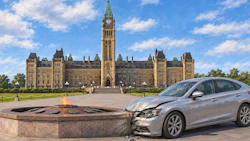
Alberta's Bill 41 consolidates auto insurance claim rules into the Automobile Insurance Act to support the Care-First system launching January 1, 2027, which replaces most injury lawsuits with expanded medical and rehabilitation benefits while projecting average premium savings of $297 per vehicle.
- Bill 41 moves existing auto insurance provisions into the Automobile Insurance Act to align with Care-First launch on January 1, 2027
- Eligible medical and rehabilitation expenses will receive lifetime coverage, replacing the current $50,000 limit over two years
- Income replacement increases from the lesser of $600 weekly or 80% of gross earnings to as much as 90% of net income
- Average premium reduction of 13.7% ($297 per vehicle) projected across approximately 3.13 million private passenger vehicles
- Insurers must continue obtaining written consent or reasonable inspection opportunity before vehicle repairs proceed, with exceptions for emergency damage prevention
Alberta’s government has introduced Bill 41 to move existing auto insurance rules into the Automobile Insurance Act and align its accident compensation program with the province’s new Care-First system.
The bill comes as Alberta prepares to launch Care-First on Jan. 1, 2027, replacing most injury lawsuits with expanded medical, rehabilitation and income-support benefits paid regardless of who caused a collision.
Alberta's finance minister Jason Nixon introduced Bill 41, the Financial Statutes Amendment Act, 2026 (No. 2), on Nov. 17. Its insurance provisions would amend seven laws to support the transition.
The underlying Care-First framework was established through the Automobile Insurance Act, which received royal assent on May 15, 2025. Bill 41 would bring existing insurance provisions into that legislation, including rules governing vehicle repairs, inspections, valuations and claims disputes.
Those conditions would continue to require the insurer’s written consent or a reasonable opportunity to inspect a damaged vehicle before repairs proceed. Work immediately necessary to prevent further damage would remain an exception.
The insurer’s liability would continue to be limited by the vehicle’s actual cash value, taking depreciation into account. Repair or replacement costs would be assessed using materials of similar kind and quality.
Disagreements over the repairs required, their adequacy or the amount of the loss would continue through the dispute resolution process under section 519 of the Insurance Act. The policyholder and insurer can appoint representatives, with an umpire available if they cannot agree.
Bill 41 would also transfer direct compensation for property damage into the Automobile Insurance Act. That system, introduced in Alberta in 2022, allows drivers who are not at fault to claim vehicle repair costs through their own insurer. Collision and comprehensive insurance would remain additional coverage.
The proposed changes to the Motor Vehicle Accident Claims program would provide a route to Care-First benefits for eligible injured people when no insurer is responsible for paying them.
Under the broader Care-First reform, private insurers will continue selling auto insurance, while the way collision injuries are compensated will change.
Eligible medical and rehabilitation expenses will receive lifetime coverage, replacing the current $50,000 limit over two years. Income replacement will increase from the lesser of $600 a week or 80% of gross earnings to as much as 90% of net income, subject to an annually adjusted earnings ceiling.
Rights to sue will be restricted, with exceptions including cases where an at-fault driver is convicted of specified serious driving offences.
The government has argued that reducing litigation costs will allow insurers to provide those benefits while charging lower premiums.
“What Albertans can expect to see is stability in their costs,” Nate Horner, then finance minister, told the legislature’s resource stewardship committee on March 17. He said the government also expected savings and faster access to treatment.
Samir Kayande, the NDP MLA for Calgary-Elbow, questioned whether lower insurer costs would reach policyholders during debate on an earlier financial statutes bill on April 15.
“There’s no guarantee that rates are going to go down,” Kayande said.
The Automobile Insurance Rate Board subsequently published its analysis of approved Care-First rate filings on Sept. 8. Those filings cover approximately 3.13 million private passenger vehicles and show an average premium reduction of 13.7%, or $297 per vehicle.
Premiums are projected to fall for 88.2% of those vehicles, rise for 9.8% and remain unchanged for 2%.
Those reductions reflect changes to bodily injury, accident benefits and underinsured motorist coverage. Insurers were not allowed to use their Care-First implementation filings to change additional coverages such as collision.
Aaron Sutherland, vice-president for the Pacific and Western regions at the Insurance Bureau of Canada, supported Bill 41 in a Nov. 17 statement and put the average annual saving at $300. The bureau represents Canada’s private home, auto and business insurers.
The bureau says renewal notices issued from Nov. 1 for policies taking effect Jan. 1, 2027 reflect the new pricing. Individual premiums depend on the insurer, vehicle, coverage and driving record.
Bill 41 had received first reading as of Nov. 19. It must complete the remaining legislative stages and receive royal assent before becoming law.