The Insurance Corporation of British Columbia is seeking a contractor to transport electric and hybrid vehicle writeoffs by water to salvage yards in Nanaimo, the Lower Mainland, and Fraser Valley, with bids due November 30. The contractor must comply with dangerous goods regulations and handle paperwork, while BC Ferries allows undamaged or minimally damaged EVs aboard after visual inspection.
- ICBC is accepting bids for a hybrid vehicle salvage tow contract involving water transport to yards in Nanaimo, Lower Mainland, and Fraser Valley
- Contractor must have experience with dangerous goods compliance and vehicle water hauling, plus paperwork handling and delivery confirmation
- BC Ferries allows undriveable EVs on ferries if undamaged or with only minor cosmetic damage after visual inspection; structural damage or water above axles disqualifies vehicles
- Bid deadline is November 30; the tender provides no figures on expected vehicle count, wait times, or pickup deadlines
- Transport Canada identifies commercial cargo vessels and barges as alternatives for damaged EVs that cannot use standard ferries
Officials at the Insurance Corporation of British Columbia are taking bids to move electric and hybrid writeoffs by water.
The contractor would arrange both the tow and the crossing for vehicles that cannot be driven. Bidders need experience hauling vehicles by water and complying with dangerous goods rules. The contractor would also handle the paperwork and confirm delivery. Bids close Nov. 30.
The tender names salvage yards in Nanaimo, the Lower Mainland and the Fraser Valley. Bidders need experience hauling vehicles by water and complying with dangerous goods rules.
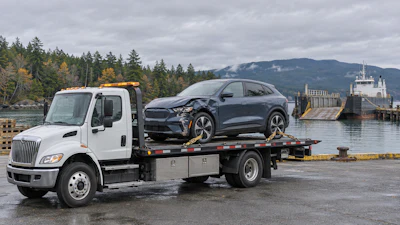
The public notice gives no start date, expected vehicle count or pickup deadline. When an EV is written off and needs a ferry or barge tow, the ICBC arranges and pays for the move once the owner signs over the vehicle.
A participating bodyshop submits a tow request when the vehicle is ready to leave. Shops that also serve as off-site salvage yards must file that request to bill the ICBC for storage.
BC Ferries loosened its rules in May to allow undriveable EVs aboard after a visual check if they are undamaged or have only minor cosmetic damage. A broken side mirror can pass that check. Structural damage or signs that water rose above the axles can keep the vehicle off the ferry. Transport Canada identifies commercial cargo vessels and barges as alternatives for damaged EVs.
“Our industry has been actively engaged with BC Ferries on this issue,” Ken Hendricks, senior industry relations adviser at the Automotive Retailers Association, said in the May release. He welcomed the changes. Ferry officials said they still had “no standardized inspection framework” to verify a damaged battery’s condition for transport.
The tender gives no figure for how many writeoffs need a water crossing or how long they now wait for pickup. Those are the figures coastal shops need to judge whether the contract will get vehicles off their lots sooner.