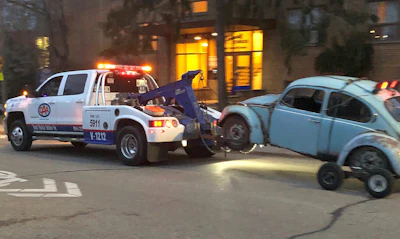
Ontario Bill 119 extends a 200-metre towing restriction to parking lot crashes and private property, preventing tow operators from offering unsolicited services near crash scenes while still allowing drivers to call their own tow truck if needed.
- Bill 119 extends Ontario's existing 200-metre towing ban from highways to parking lots and private property
- 78% of respondents who were solicited by uncalled tow trucks reported problems, compared to 15% who called directly
- Tow operators can still respond if requested by the driver or police, but cannot offer unsolicited services within 200 metres
- The law requires tow operators to update rate information online and strengthens consent and billing transparency rules
- The restriction takes effect immediately upon royal assent to Bill 119
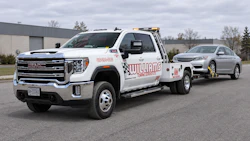
Ontario is moving to extend its 200-metre towing restriction to crashes in shopping centre parking lots and on other private property.
Under the new rules, a driver involved in a crash would still be able to call a tow truck to the scene.
The legislature passed Bill 119 at third reading Nov. 16. The bill was awaiting royal assent as of Nov. 26. The towing changes take effect on the day it receives assent.
Ontario’s existing rule covers highways. Bill 119 removes that limit and extends the ban on offering or providing an unsolicited tow to anyone acting on behalf of a tow operator or driver.
The 200 metres are measured from the crash scene or a vehicle involved in the crash.
That means a tow operator who turns up uninvited after a parking lot crash would be barred from offering a tow within 200 metres. The operator could still send a driver if someone involved in the crash asks for one. The same exception applies to drivers called by a police officer or inspector. On a designated restricted highway, the operator still needs authorization to tow in that zone.
The move comes in response to police concerns about the safety of operators positioning themselves near to crashes in order to solicit work. Members of the public also expressed similar concerns in an Ontario consultation conducted in 2020 and 2021, 78% of respondents who hired a tow truck that showed up uncalled reported a problem. The figure was 15% among those who called an operator directly and 10% among those who called an automobile association or roadside assistance program.
“CAA welcomes the province’s actions to strengthen oversight of the towing industry and improve safety on Ontario’s roads,” said Lauren Fisher, manager of government and stakeholder relations at CAA South Central Ontario, in a statement read into the legislature June 1. During the same debate, Scarborough–Guildwood MPP Andrea Hazell asked, “Who will be enforcing this policy?”
Ontario’s existing consent and billing rules provide a way to check where the customer agreed to have a vehicle taken. For a standard paid tow arranged by the customer, the consent form identifies the chosen destination, the towing company and the driver’s certificate number. The customer is entitled to an itemized invoice before payment.
A tow operator who refers the customer to a repair business must disclose any interest in the business or benefit from the referral.
Bill 119 also requires the province to update its online rate list after an operator submits new towing or storage rates. A regulation will set the posting deadline.
Shops can already use the provincial lookup to check an operator’s certificate status and published maximum rates against a bill.