
If there was one clear takeaway from Day Two at IBIS U.S.A., it’s this: the path forward for collision repair will be shaped by those willing to challenge how the industry thinks, learns and works. Events like this—where ideas are tested, debated and shared—are where that shift begins.
The conversation opened with a hard truth. As an industry, we’re not as good as we think we are—and the risk of getting it wrong is rising fast.
For years, success meant ensuring a vehicle performed in a second collision. That still matters. But today, with ADAS, the stakes are higher. Shops now play a role in helping drivers avoid accidents altogether. Miss a calibration or rely on outdated methods, and the consequences go beyond a poor repair—they become real safety risks.
That message was reinforced by Jeff Peevy of I-CAR, who pointed to a deeper issue: the industry isn’t struggling with tools—it’s struggling with mindset. Complexity is accelerating. Sensors, cameras and joining methods are evolving quickly, yet many repairs are still approached with old habits. Peevy’s message was simple: learning velocity matters. Not what you know—but how fast you can learn and unlearn. Experience still has value, but its shelf life is shrinking.
EV risk was another clear focus. Dirk Fuchs of the Energy Security Agency pointed to battery handling, storage and transport as growing operational exposures. Standards like NFPA 855 are quickly becoming baseline, while tighter transport regulations will require certified packaging and trained staff across the entire operation.
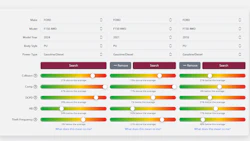
The conversation around AI brought it back to the shop floor. Keith Crerar of asTech pointed to a reality every shop recognizes: the problem isn’t a lack of talent—it’s process. Estimators are buried in disconnected systems, spending more time figuring out the job than planning it. The opportunity is practical—remove repetitive steps, improve how information is interpreted and reduce uncertainty earlier in the repair. Shops that streamline workflow and improve communication, especially with customers, will move faster and build trust without adding workload.
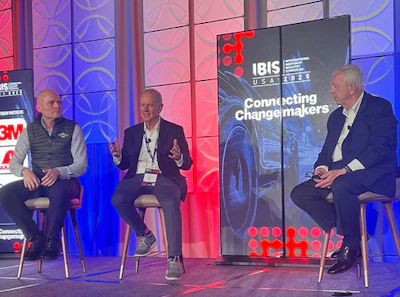
The afternoon session challenged the industry to look beyond the shop. With consolidation, insurer influence, emerging fleet models and shrinking margins, the question was direct: is the future being shaped—or simply accepted? The idea of “changemakers” came into focus here. Those willing to question the current model, align around what proper repair actually requires and take an active role in defining what comes next will influence where the industry lands.
Running through the entire day were the familiar themes. Shops are being asked to take on more—training, compliance and increasingly complex repairs—while write-offs increase and the number of accidents decrease.
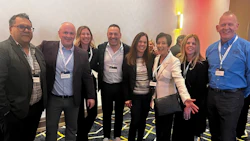
But there was also something more constructive beneath it. When leaders from across the industry come together—OEMs, shops, insurers, technology providers—there’s an opportunity to close gaps, challenge assumptions and move forward with a clearer, shared understanding. That’s where progress starts.
Day Two didn’t just highlight the challenges. It showed where the momentum is coming from. And if there’s a key to success in a market this complex, it’s this: conversations like these—real, honest and sometimes uncomfortable—are what turn an industry into a community of "change-makers."