The automotive industry is undergoing rapid transformation as vehicles become more complex, electric vehicle claims rise, and artificial intelligence moves into everyday business processes. Success depends not just on new technology, but on collaboration between insurers, repairers, manufacturers and governments, along with skilled people who can use these tools effectively.
- Electric vehicle claims increased 24% in 2025, signaling a major shift in the types of vehicles the industry must handle
- Chinese automakers BYD, Chery and Geely are entering the Canadian market, requiring new parts data, repair procedures and service networks
- Smart-glasses technology with voice commands allows technicians to access repair information without leaving the vehicle
- AI's value lies in appropriate autonomy, not maximum automation—technology should reduce admin work and flag issues, but people remain responsible for safety decisions
- Information must flow between organizations, not just within them; digitizing individual tasks without connecting the full claims journey limits progress
Vehicles are becoming more sophisticated, new manufacturers are preparing to enter the Canadian market, and the information needed to assess, insure and repair a vehicle is growing more complex. At the same time, artificial intelligence is moving beyond experimentation and finding a place in everyday business processes.
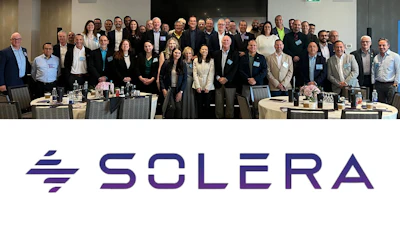
Those converging changes framed Solera’s Future of Automotive in the AI Era summit, which brought together representatives from the automotive, insurance and collision repair sectors for a day of presentations, demonstrations and discussion about the industry's direction.
Bringing together Ontario’s Minister of Transportation, representatives of the Chinese Consulate, and leaders from across Canada’s insurance and automotive repair industries, the summit reflected Solera’s continued commitment to the Canadian market.
Opening the event, Solera Canada country leader Omar Nabil emphasized that no single part of the industry can navigate those changes alone.
“No single company is going to shape the future of our industry on its own,” Nabil said. “It takes insurers, repairers, manufacturers, tech companies, governments and industry partners to work together.”
Ontario Minister of Transportation Prabmeet Sarkaria also addressed attendees, highlighting the importance of keeping pace with vehicle technology while maintaining public confidence in the transportation system. For drivers involved in a collision, he said, the priorities remain straightforward.
“They want to know that everyone is safe, that their car will be repaired properly and that they can get back to their everyday life,” Sarkaria said.
Delivering that outcome is becoming more complicated as vehicles incorporate additional cameras, sensors and advanced driver assistance systems. These technologies bring new considerations for collision repair, insurance and regulation, making coordination across the industry increasingly important.
Nabil outlined several pressures already affecting the Canadian market. Electric vehicle claims increased by 24% in 2025, according to figures shared during his presentation, while Solera data showed the average price of alternative parts had risen by 11.3%.
The expected arrival of Chinese automakers BYD, Chery and Geely in Canada adds another layer of change. Different parts supply arrangements, repair procedures and service networks could create new demands for businesses working with these vehicles. Nabil said Solera expects to add data and procedures for the brands to its platform in the first quarter of 2027, with more manufacturers to follow.
Preparation will need to extend beyond identifying new vehicle models. Parts availability, diagnostic access, battery repair, calibration requirements and total-loss decisions will all factor into how the industry responds.
Deputy Consul General Hongbo Cheng of the Consulate General of China in Toronto shared perspectives on the opportunities for Chinese new energy vehicles in the Canadian market, exploring the potential for expanded bilateral collaboration, including opportunities to build on vehicle trade through investment, domestic production and deeper industrial cooperation.
However, the challenge is not simply having more information available, but making sure the right information reaches the people who need it. That question came into focus during a technology demonstration by Victoria Repice, senior vice-president of product management, vehicle repair at Solera.
“Having all that information is not good if someone can't find it,” Repice said.
Repice presented the recently launched NAPA XcelleratoR smart-glasses featuring Direct-Hit XR. The technology is designed to let technicians use voice commands to access repair information while remaining at the vehicle. In the demonstration, the system identified a vehicle using its VIN and answered questions about oil capacity, service procedures and technical service bulletins.
The concept addresses a familiar interruption in the shop: leaving a vehicle to search for information on a computer, then returning to the repair. Repice also discussed the potential for the technology to support training through guided instruction and knowledge assessment. The demonstration offered a glimpse of how information access could change at the point of repair.
Alongside the smart-glasses, attendees also received a demonstration of the recently launched NAPA XcelleratoR goggles that provide immersive VR training to new technicians. As vehicle systems and repair procedures evolve, the ability to make instruction more interactive could help support the development of new skills and bring in a new generation of technicians.
Artificial intelligence was also a major focus of the summit, particularly in discussions about how connected data could improve decisions across the claims process. Tim Sixta, senior vice-president of product management and global underwriting, North America claims and fleet, at Solera, focused on the handoffs between organizations involved in a claim and the information that needs to move between them.
“The most significant changes to the industry will not happen entirely within any one of our companies. They will happen between our companies,” Sixta said.
A claim can involve an insurer, repair facility, parts supplier, vehicle manufacturer and other service providers, each handling information that may be relevant to the next step. But digitizing individual tasks does not necessarily connect the process as a whole.
“We digitized the task. We did not fully connect the journey,” Sixta said.
AI could help close some of those gaps, but Sixta cautioned against treating automation as the end goal.
“The goal is not maximum autonomy. The goal is appropriate autonomy,” he said.
That distinction matters in collision repair, where technology can help organize information, reduce administrative work or flag issues earlier, but people remain responsible for assessing damage, planning repairs and making decisions that affect vehicle safety. The value of AI will depend on whether it helps solve those practical problems.
An afternoon session focused on moving AI ideas into action, examining how organizations can identify a challenge and test a potential solution. The discussion reinforced the need to look beyond the technology itself and consider where it can make a meaningful difference to business processes.
The day's final panel widened the conversation to the relationship between AI, automotive technology and circularity, connecting developments in claims and repair to broader questions about the vehicle life cycle and sustainability.
Across the presentations, demonstrations and discussions, a consistent message emerged: technology alone will not determine how successfully the industry adapts. New tools need to be supported by reliable information, skilled people and collaboration between the organizations involved.
“The best investment you can make in AI is making it in people,” said Nabil.
As vehicles evolve and claims and repair processes become more connected, the industry faces a broader challenge: ensuring that the people, skills and partnerships are in place to make the most of emerging technologies. The future of automotive repair will depend not simply on what AI and other innovations make possible, but on how they are brought together to solve real industry challenges.