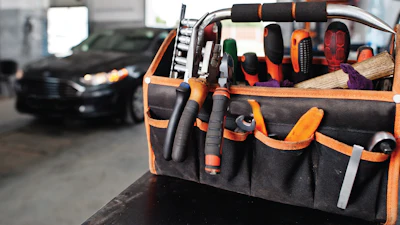
In collision repair, handtools remain essential to achieving quality results, with modern designs now emphasizing ergonomics, lightweight materials, and modularity to improve technician efficiency, reduce fatigue, and maintain reliability across thousands of jobs.
- Handtools maintain their critical role in collision repair despite advances in automation and AI-driven systems, providing technicians with direct control over repair quality.
- Modern materials and design innovations include aluminum alloys, polymer grips, micro-textured surfaces, and improved weight distribution to reduce strain and increase work speed.
- Ergonomics is now a decisive purchasing factor, with forward-thinking shops prioritizing tools that support proper posture, distribute effort evenly, and reduce wrist torque to extend careers and prevent injury.
- Modular toolbox systems with quick-change handles, adjustable heads, and magnetic organization allow technicians to tailor tools to specific jobs and work without interruption.
- Tool value is measured through productivity and longevity, with the most prized tools being those that require minimal maintenance, rarely fail, and maintain reliability across thousands of repair jobs.

The best shops know this. They balance investment in cutting-edge automation with respect for the tools that do the quiet, constant work. Without the small refinements—the sanding block for fine edges, the dolly for contour, the wrench for adjustment—no repair reaches perfection. These tools are the pulse of the trade, keeping rhythm through every stage of repair.
Even the simplest implements evolve. Modern toolmakers have turned their attention to weight distribution, handle geometry and vibration reduction. Aluminium alloys, polymer grips and micro-textured surfaces now replace the blunt steel and timber of earlier decades. A lighter, steadier tool allows a technician to work faster and with less strain—an improvement measured not in seconds, but in endurance.
Efficiency remains the eternal benchmark. A tool that shortens a process by even a few minutes, that prevents rework or fatigue, quickly earns its place in the bay. Business owners measure this value through the lens of productivity and longevity. The most prized tools are those that cost little to maintain, rarely fail and stay reliable through the thousandth job as they were on the first.
Yet the modern technician looks beyond speed alone. Ergonomics has become a decisive factor in purchasing. Tools designed to support proper posture, distribute effort evenly and reduce wrist torque are now standard for forward-thinking shops. A tool that works with the body rather than against it extends not only a workday but a career. The best buyers understand that well-being is a return on investment.
The shift toward modularity has also redefined the modern toolbox. Quick-change handles, adjustable heads and magnetic systems allow technicians to tailor their tools to the job at hand. Organization has become an efficiency strategy in itself—each wrench and sanding pad kept in order so that work continues without pause or frustration.
So as you browse the pages ahead, think beyond the gleam of chrome or the lure of the newest gadget. Consider the rhythm of your shop—the tempo of progress that begins and ends with the movement of a skilled hand. Technology may set the pace, but it is the handtool that keeps time. Choose wisely, and that rhythm will carry your team forward—steady, confident and true.