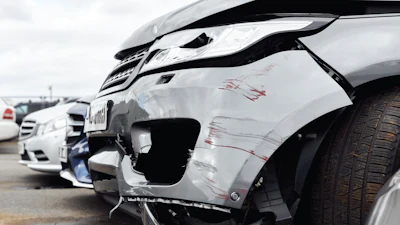

Low-speed parking lot collisions in Canada follow strict fault determination rules where drivers backing out or leaving spaces are typically 100 percent at fault if they hit another vehicle, and even minor claims can increase insurance premiums if they occur frequently.
- Drivers backing out of parking spaces or feeder lanes are generally 100 percent at fault if they hit another vehicle, regardless of speed or impact severity.
- Ontario's Fault Determination Rules establish a clear hierarchy: moving traffic lanes outrank parking maneuvers, meaning reversing drivers must yield.
- Hit-and-run damage discovered after the fact may be treated as at-fault claims without a police report filed within 24 hours, even if the driver wasn't present.
- Multiple small parking lot claims signal higher risk to insurers and can lead to premium increases or reconsideration of driver eligibility.
- Documentation including photos of damage, lot layout, witness statements, and contact information strengthens fault determination and smooths the claims process.
WHY LOW-SPEED COLLISIONS CAUSE CONFUSION FOR CANADIAN DRIVERS AND HOW INSURERS DECIDE WHO’S AT FAULT
The choreography of a parking lot is something most drivers take for granted. Rows of metal, a tangle of feeder lanes and the slow shuffle of vehicles edging into or out of cramped spaces — it all feels casual, almost inconsequential after the focus required on public roads. Yet it’s in these low-speed environments where confusion thrives. Parking lot fender benders remain one of the most misunderstood types of collision, and according to Steven Harris, licensed insurance broker and LowestRates. ca expert, the uncertainty begins long before a driver calls their insurer.
Parking lots at shopping centres and office buildings form a strange in-between space. They’re not the open road, but they still carry rules. Harris says many Canadians don’t realise just how firmly those rules are applied. Fault, he explains, isn’t a guessing game, even when the impact is little more than a nudge of a bumper.
“Parking lot collisions are one of the biggest sources of confusion I see,” says Harris. “Many drivers assume that since these incidents happen on private property, they’re handled differently or that fault can’t be assigned, but insurers follow clear rules. If you’re backing out or leaving a space, you’re generally 100 percent at fault if you hit another vehicle, no matter how slow you’re moving. These collisions also tend to increase in bad weather, when visibility is low and surfaces are slippery, so taking extra care in winter can help drivers avoid unnecessary claims.”
Under Ontario’s Fault Determination Rules, the basics are straightforward. A driver leaving a parking space or feeder lane must yield to traffic already flowing through the lot. It’s a simple hierarchy — moving lanes outrank manoeuvres. If a driver reverses into that path and makes contact, they are typically deemed fully at fault. Two vehicles backing out at once complicate the picture slightly, but not as much as drivers tend to imagine. In many cases, responsibility is shared because both were in motion and neither yielded. Harris notes that insurers rely on standardized provincial rules rather than personal interpretation. Vehicle positions, directions of travel and recorded movements tell the story. The same framework applies whether the collision occurs on a city street, a suburban driveway or the far corner of a retail lot where visibility is thin and winter slush pushes drivers to hurry.
Then there are the hit-and-runs — the door dings discovered after a grocery run or the scraped bumper that wasn’t there an hour earlier. Harris stresses that timing matters. Without a police report filed within 24 hours, insurers may treat that damage as an at-fault claim, even if the driver was nowhere near the scene when it happened. The result can be costly.
Documentation becomes the driver’s lifeline in these situations. Photos of the damage, the layout of the lot and any nearby signage can shape an insurer’s understanding. Contact information from the other driver and statements from witnesses can do the same. Mounting evidence means clearer fault determination, which in turn smooths the claims process.
It may feel counterintuitive that such minor incidents can influence future premiums, but they do. Harris says frequency matters as much as severity. A handful of small claims — all easy to shrug off when the vehicle remains drivable — can still signal higher risk to an insurer. Some providers may even reconsider a driver’s eligibility if they collect repeated parking lot incidents over a short period of time.
“A lot of these collisions are avoidable with just a bit more awareness,” adds Harris. “Parking lots have their own flow of traffic, rightof- way rules and blind spots. Knowing how those apply can help drivers prevent claims and avoid unexpected premium increases.” The lesson, then, is one of attention. Parking lots may be slow, but they aren’t simple. The rules are clear and the consequences — from fault to premiums — are real.