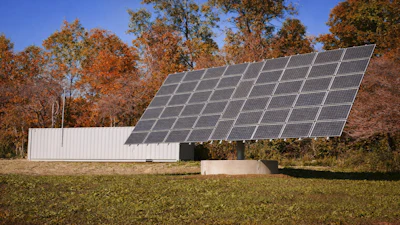

Mapleview Energy is using repurposed electric vehicle batteries to store solar energy on an Ontario farm through a 600 kWh battery storage system that provides backup power and reduces electricity costs. Retired EV batteries retain 70-80% of their original capacity, making them ideal for stationary energy storage applications where weight and size constraints no longer apply.
- Mapleview Energy deployed a 600 kWh battery energy storage system on Castellan Farm in Fergus, Ontario using repurposed EV batteries.
- Retired EV batteries retain 70-80% of their original capacity, sufficient for stationary storage where automotive constraints don't apply.
- The system provides solar energy storage, peak demand management, backup power, and remote monitoring capabilities for farm operations.
- The prototype was developed and tested at Ontario Tech University's Battery Lab following UL 1974-aligned procedures over two years.
- Founder Nick Nesbitt aims to build an EV battery repurposing gigafactory in Ontario by 2032 to scale circular economy solutions.
Repurposed electric vehicle batteries are being used to store solar energy on a farm in Fergus, Ont.
Canadian technology company Mapleview Energy’s 600 kWh battery energy storage system (BESS) trial and pilot project is held on Castellan Farm, where the repurposed EV batteries will be used to store solar energy gathered on the farm.
Founded in 2024 by Nick Nesbitt, Mapleview Energy is a member of the Ontario Clean Technology Industry Association, and Castellan Farm is its first commercial deployment. According to the company’s website, the battery storage system is integrated with on-site solar to “provide backup power, peak shaving and resilience for farm operations.”
The project will launch later this month and is “the culmination of over two years of prototype development, testing and validation,” as stated in Mapleview Energy’s news release. The BESS prototype was built and tested following UL 1974-aligned procedures at Ontario Tech University’s Battery Lab in collaboration with Dr. Sheldon Williamson, and performance validation was completed through the Ontario Centre for Innovation’s Technology Access Program.
The repurposed EV batteries used in the system have been sourced, tested, graded and integrated following UL 1974-aligned procedures. Mapleview Energy partnered with Dr. Sheldon Williamson’s Battery Lab to develop the prototype and procedures.
According to Mapleview Energy’s news release, the system includes the following key capabilities:
- Solar energy storage and time-shifting to maximize self-consumption
- Peak demand management to reduce electricity costs
- Backup power capability for critical farm operations
- Remote monitoring and management through Mapleview’s battery management system
Moreover, the system’s modular design enables it to expand as the farm’s energy needs grow. Cell-level health, temperature and state of charge of the batteries are continuously monitored to ensure safe and efficient operation.
Mapleview Energy reported that “retired EV batteries typically retain 70-80% of their original capacity, more than sufficient for stationary storage applications where the weight and size constraints of automotive use no longer apply.”
Nesbitt, who commented on the pilot launch in a LinkedIn post, wrote his master’s thesis on the EV battery circular economy eight years ago, and his ambition to give EV batteries a second life led him to be named one of The Peak’s 2026 Emerging Leaders.
According to an interview with Recycling Resource Inc., Nesbitt desires to build an EV battery repurposing gigafactory in Ontario by 2032.