Top collision repair trainers shared efficiency tips covering damage assessment, structural repairs, body filler application, paint correction, and glue-pulling techniques to help technicians complete repairs faster and more effectively.
- Spend adequate time on damage assessment upfront to reduce overall repair time and improve accuracy
- Use bodylines as guides when repairing panels and work from the edge inward to avoid the oil can effect
- Proper surface preparation, mixing, and timing with body fillers and lightweight compounds are critical for productivity
- Apply minimal product when polishing—an X pattern with one dot per quadrant on pads is sufficient
- Always clean panels with grease remover and alcohol before glue-pulling, as dent depth, size, and position determine repair strategy
Markham, Ontario -- On October 23, more than 50 paint and body technicians attended Collision Repair magazine's Efficiency Edge Training Workshop.
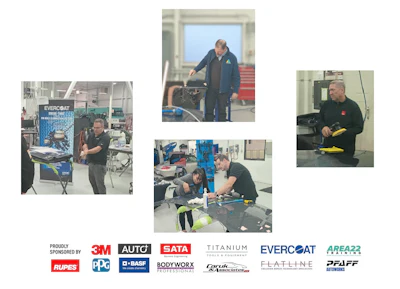
During the event, groups rotated through a circle of live demonstrations taught by some of the most respected trainers in the industry. While the magazine's full coverage won't be available until Monday, the editorial team has put together a few pieces of wisdom shared by the trainers demonstrating various refinishing, painting and repairing techniques.
At the BETAG Innovation station, Kelly Roberts, BETAG's technical director for North America, offered guidance on structural repair accuracy and dent correction.
“Don’t rush through the damage assessment phase — spending more time there means you’ll spend less time overall.”
“When you’re working on a panel, always use the bodyline to guide your repairs,” he said.
“Whether you’re using a hammer and dolly or glue, don’t pull from the deepest point. Work in from the edge to avoid the oil can effect.”
Nearby, Randy MacLeod, technical trainer for Evercoat, discussed techniques to boost productivity between metal finishing and priming, including proper surface prep, mixing and timing.
“When working with body filler or fibreglass, always stir the can to keep the ingredients from separating,” he said.
“Lightweight body fillers cure faster — spreading them too thin will make them set before you’re ready.”
“Body fillers get tougher to sand the longer they sit, so don’t delay.”
Across the floor, Ryan Beattie, technical trainer with Caruk and Associates, who was representing Rupes, demonstrated efficient paint correction techniques and product control.
“When polishing with an open-cell pad, use less product than you think,” he said. “Drawing an X across the pad and adding a single dot in each quadrant is plenty.”
At another station, Robert Gargaro, technical trainer for Titanium Tools and Equipment, walked participants through the finer points of glue-pulling repairs.
“Always clean the panel with grease remover and alcohol before pulling,” he said.
“No two dents behave the same way — depth, size and position all change your repair strategy.”