It is that time of year again when high schools and colleges prepare for Skills Canada provincial competitions and its national event, which is expected to run from May 28 and 29 at Toronto’s Enercare Centre.
Many reading this may not be aware these competitions are even happening, despite their role in developing the next generation of talent. I consider my involvement in Skills competitions, which began in 1992, as one of the most rewarding parts of my career in the auto collision industry. It has given me the opportunity to work as a trainer, high school tech chair, judge, provincial tech chair, national tech chair and WorldSkills expert.
It has also allowed me to help allay the labour shortage facing Canada's collision sector. Competitions such as these offer a practical way to shift perception by showcasing the level of skill required to succeed and presenting the industry at its best. For shops looking to hire, these competitions offer a direct look at the capabilities of young technicians entering the trade.
Over 34 years, I have seen many competitors move on to rewarding careers, including roles as technicians, college instructors, operations managers and appraisers. A select few have advanced further, earning the opportunity to compete at WorldSkills.
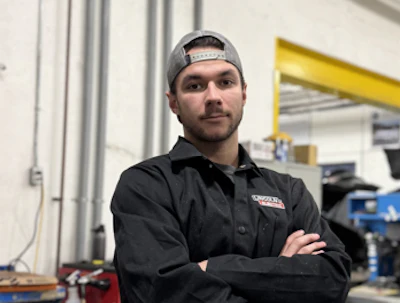
Ethan began his WorldSkills journey in high school through a four-credit co-op program at Excellence Auto Collision, where his ability was evident early. He competed virtually during COVID-19, earning gold at the secondary level in Ontario, and was hired by Mark Millson upon graduation.
He went on to compete at the post-secondary level, earning silver provincially in 2023 and bronze in 2024. Returning again in 2025, he secured gold at the provincial level and gold at the national competition, earning his place at WorldSkills Shanghai.
With support from his trainer Mark Millson, a former WorldSkills competitor, his employer Excellence Auto Collision ACX and my guidance as Canada’s WorldSkills expert, expectations are high for what he can achieve.
For its mission to be successful, Skills Canada must receive support from across the industry. Equipment, judges and volunteers have helped sustain these events and maintain their standard over the years. I invite everyone with a stake in the collision repair sector to consider ways to support its mission as well.
About the author
Bill Speed is a Canadian auto collision industry veteran with more than 30 years of involvement in Skills Canada and WorldSkills competitions. Since 1992, he has served as a trainer, judge, provincial and national technical chair and WorldSkills expert for Canada, helping to develop young talent and advance technical standards across the industry.