OEM parts prices have risen more than other collision parts categories, with new manufacturer parts recording the greatest price increases, while aftermarket prices remained stable and recycled parts face cost pressures from international competition for salvage vehicles.
- New OEM parts recorded the greatest price increases over the period tracked, though increases have slowed in recent months
- Aftermarket prices remained comparatively stable and finished September below their early-2024 level
- A weaker U.S. dollar has made American salvage vehicles more affordable for overseas buyers, forcing U.S. recyclers to pay more for vehicles
- Single delayed parts can halt vehicle delivery even when most order arrives quickly, with average delivery times masking critical bottlenecks
- New OEM parts show longer wait times than aftermarket or recycled parts due to distribution center requirements for trim pieces and color-specific components
Prices for new vehicle manufacturer parts have risen more than those of other major collision parts categories, according to PartsTrader’s fall 2026 Collision Industry Trends Report covering the U.S.
The report also highlights how a single late part can hold up a repair, even when most of the order arrives quickly.
Written by Greg Horn, vice-president of sales enablement at Chicago-based parts procurement software supplier PartsTrader, the report examines prices and delivery times in its U.S. marketplace.
Its price index tracks commonly purchased components, including fenders, hoods, lamps, wheels and bumper covers.
New original OEM parts recorded the greatest price increases over the period tracked, although those increases have slowed in recent months. Aftermarket prices remained comparatively stable and finished September below their early-2024 level.
Prices also fell for manufacturer parts sold through price-matching programs. Horn attributes some of that decline to changes in which parts qualify for manufacturer reimbursement under those programs.
Recycled parts face another cost pressure. According to Horn, a weaker U.S. dollar has made American salvage vehicles more affordable for overseas buyers. Competition from those buyers can force U.S. recyclers to pay more for vehicles they intend to dismantle.
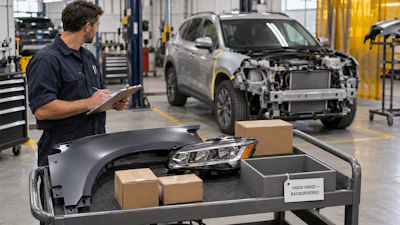
On deliveries, Horn explains why an average waiting time can give repairers an incomplete picture. He uses an example involving nine parts. Most arrive within one day, while a headlight takes 1.5 days and a hood takes 2.5 days. A hood hinge takes 11 days. The average delivery time is irrelevant as the repairer may still be unable to finish the vehicle until the hinge arrives.
Horn describes it as “a great example of a delayed or back-ordered part that stops delivery of the vehicle.”
To account for these longer waits, the report uses a calculation that gives more weight to delivery delays than a simple average would. Its September figures show longer waits for new OEM parts than for aftermarket or recycled parts.
Horn notes that manufacturer orders can include small trim pieces or colour-specific components that must come from a distribution centre. Aftermarket suppliers can stock larger quantities across a smaller range of parts.